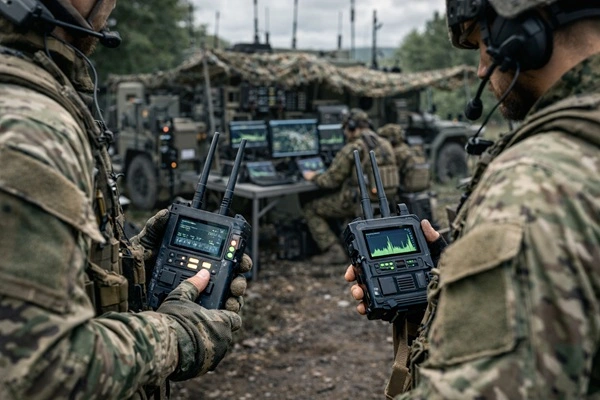
A signal jammer is a device designed to manage and control wireless communications such as GSM, WiFi, GPS, and radio signals. In recent years, these technologies have become increasingly relevant in professional environments where communication privacy and control are essential.
But how does a jammer actually work? And how can it interfere with signals that are invisible to the human eye? In this guide, we’ll break it down in simple terms, without unnecessary technical complexity.
What is a signal jammer and what is it used for?
A signal jammer is an electronic device that transmits signals on the same frequencies used by wireless communication systems. By doing so, it creates interference that disrupts the normal communication between devices.
Think of it like trying to have a conversation in a very noisy room. Even if someone is speaking clearly, the surrounding noise makes it difficult to hear or understand. A jammer works in a similar way, but at a signal level.
Signal jammers are used in a variety of professional scenarios, including:
- corporate environments and secure offices
- conference rooms and private meetings
- investigative and security operations
- controlled communication environments
- Drone blocker
How a signal jammer works in practice
The core principle behind a jammer is interference. Every wireless device operates on a specific frequency. A jammer targets that same frequency and emits a stronger or more disruptive signal.
As a result, the receiving device can no longer properly distinguish the original signal. This leads to:
- dropped or blocked calls
- WiFi connection failures
- loss of GPS tracking
- unstable or interrupted radio communications
The effectiveness of a jammer depends on several factors:
- output power of the device
- distance from the target devices
- physical obstacles such as walls or structures
- type and strength of the original signal
What signals can a jammer affect?
Not all jammers are designed the same way. Each device operates within specific frequency ranges. The most common types of signals that can be affected include:
- cellular networks (2G, 3G, 4G, 5G)
- WiFi and Bluetooth connections
- GPS and tracking systems
- radio communications (VHF and UHF)
Some jammers are designed to target a single type of signal, while more advanced systems can manage multiple frequencies at the same time. These multi-band devices are typically used in professional environments where broader coverage is required.
Main types of signal jammers
To better understand how jammers work, it’s helpful to look at the main categories available on the market.
Portable jammers
Portable jammers are compact and easy to transport. They are designed for quick deployment and flexible use, without requiring permanent installation.
They are ideal for:
- temporary operations
- off-site meetings
- mobile environments
Fixed jammers
Fixed jammers are permanently installed systems that offer higher power and broader coverage compared to portable devices.
They are commonly used in:
- executive offices
- conference rooms
- high-security facilities
Advanced signal control systems
More advanced solutions are designed for complex scenarios where precise signal management is required. These systems can often be integrated with detection devices to improve efficiency and control.
When is it useful to use a signal jammer?
Signal jammers are useful in situations where it is necessary to manage or limit wireless communications. Some real-world examples include:
- protecting confidential meetings
- preventing unauthorized recordings
- controlling communication in sensitive areas
- reducing interference in technical environments
In these contexts, a jammer is not just a piece of technology—it becomes a tool for communication control and information protection.
Key factors when choosing a jammer
Understanding how a jammer works is important, but choosing the right one is even more critical. Here are the main factors to consider:
- type of signal you need to manage
- size of the area to cover
- whether you need mobility or fixed installation
- required level of coverage and performance
Each situation requires a different approach, which is why there is no single “best jammer” for every use case.
Conclusion
A signal jammer works by creating controlled interference on wireless frequencies, allowing you to manage communications in specific environments. While the concept is simple, the applications can vary significantly depending on the type of system used.
If you want to explore the different types of jammers available and find the right solution for your needs, check out the
complete guide to signal jammers