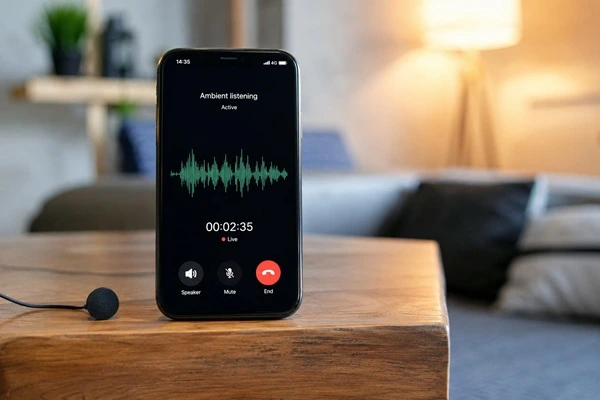
Many people believe that listening to what happens inside a room requires sophisticated surveillance equipment reserved for intelligence agencies or professional investigators.
The reality is quite different.
Today, much of the technology needed for remote audio monitoring is already built into a standard smartphone. Modern phones are equipped with highly sensitive microphones, powerful processors, and fast internet connections capable of capturing, processing, and transmitting audio in real time.
Think about a regular video call. Even when you’re standing in a busy airport, a train station, or a crowded street, the person on the other end can usually hear your voice clearly. This alone shows how advanced smartphone audio technology has become.
But how does smartphone ambient listening actually work?
The Smartphone Microphone Is More Advanced Than You Think
At the heart of every audio monitoring system is the microphone.
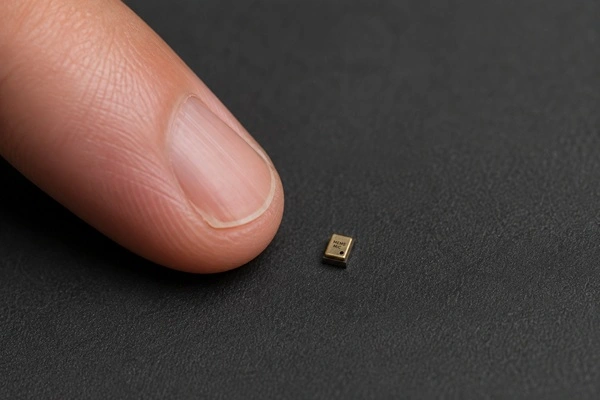
Modern smartphones use MEMS microphones (Micro-Electro-Mechanical Systems), tiny electronic components designed to deliver excellent audio performance while occupying very little space.
Compared to older microphone technologies, MEMS microphones offer several advantages:
- Extremely small size
- Low power consumption
- High sensitivity
- Better durability
- Improved audio quality
Many smartphones don’t rely on just one microphone. In fact, most premium devices contain multiple microphones strategically positioned throughout the phone.
This allows the device to capture sound from different directions and process the audio more effectively.
How Smartphones Capture Environmental Sounds
Whenever someone speaks, sound waves travel through the air.
The smartphone microphone detects these vibrations and converts them into digital signals that can be processed by the device.
This process occurs thousands of times per second, allowing the phone to capture conversations, background noises, movements, and virtually any sound present in the surrounding environment.
Several factors affect the final audio quality:
- Distance from the sound source
- Background noise
- Room acoustics
- Microphone sensitivity
- Signal processing quality
A conversation recorded inside a quiet office, for example, will sound very different from one captured in a busy restaurant or public space.
Noise Reduction Makes a Huge Difference
One of the biggest challenges in audio monitoring has always been background noise.
To solve this problem, modern smartphones use advanced audio processing technologies capable of separating voices from unwanted sounds.
Imagine making a phone call inside an airport.
Around you there may be announcements, rolling luggage, conversations, and engine noise. Yet the person on the other end can still hear your voice clearly.
This is possible thanks to technologies such as:
- Noise Reduction
- Echo Cancellation
- Voice Enhancement
- Beamforming
Beamforming is particularly interesting because it uses multiple microphones to determine where a voice is coming from and prioritize sounds originating from that direction while reducing unwanted background noise.
The result is clearer and more intelligible audio.
From Recording to Audio Transmission
Once captured by the microphone, audio can either be stored locally on the device or transmitted through the internet.
This is exactly what happens during:
- Phone calls
- Video calls
- Online meetings
- Voice messages
- Audio streaming
Before transmission, the audio is compressed using digital codecs to reduce the amount of data required while maintaining sound quality.
The audio stream is then sent through:
- 4G networks
- 5G networks
- Wi-Fi connections
- VoIP systems
The entire process takes only fractions of a second, making real-time audio communication possible almost anywhere in the world.
When a Smartphone Becomes a Monitoring Tool
The capabilities of modern smartphones have led to the development of a particular category of devices often referred to as spy phones.
The underlying principle remains the same.
The smartphone’s built-in microphone captures environmental sounds while the mobile data connection allows audio to be transmitted remotely.
In many cases, the difference lies in the software and remote control features available.
This is why many professional audio monitoring solutions have evolved directly from technologies originally developed for smartphones.
Why Mobile Audio Monitoring Has Become So Popular
One of the main advantages of a smartphone is that everything needed for audio monitoring is already integrated into a single device:
- Microphone
- Battery
- Memory
- Internet connection
- Processor
- Operating system
This makes smartphones incredibly versatile.
Applications can vary widely.
A parent may want to ensure that a minor child is safe when home alone. A family member may need to monitor the well-being of an elderly relative living independently. A business owner may want to check what is happening inside offices, warehouses, or commercial premises.
Some organizations also use audio monitoring technologies to improve the safety of personnel working in potentially hazardous environments.
In all of these situations, reliable audio transmission and good sound quality are essential.
When Professional Solutions Are Needed
Although smartphones offer impressive capabilities, certain situations require equipment specifically designed for long-term audio monitoring.
Professional devices often provide:
- Extended battery life
- Long-duration recording
- Voice-activated operation
- Continuous remote listening
- Easier concealment
- Greater operational reliability
For this reason, professionals frequently rely on dedicated solutions such as GSM audio bugs, professional audio recorders, or specialized Audio Surveillance systems designed to operate in demanding environments.
Conclusion
Smartphone Live Audio Monitoring is the result of combining MEMS microphones, digital signal processing, and modern communication networks.
What once required expensive and bulky equipment can now be achieved using technologies found inside virtually every modern smartphone.
Understanding how these systems work helps explain not only the evolution of mobile devices but also the technology behind many professional surveillance, security, and audio monitoring solutions used today.