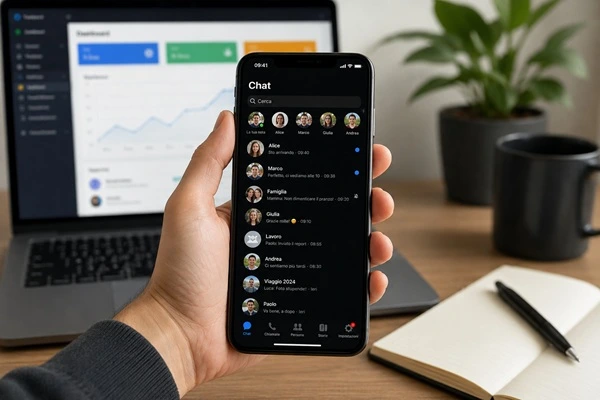
A few years ago, monitoring a phone mostly meant checking calls and text messages.
Today, things are completely different.
Most people spend their time communicating through WhatsApp, Telegram, Messenger, Instagram, Signal, and other messaging apps. In many cases, a person can go through an entire day without making a single phone call.
This is why chat and social media monitoring has become one of the most important features of a modern monitoring smartphone.
But how does it actually work?
The answer is much simpler than most people think.
A monitoring smartphone collects information from the apps installed on the device and makes that information available remotely through a secure management platform.
Most Communications Now Happen Through Apps
Traditional phone calls are no longer the main way people communicate.
Today, most conversations take place through:
- Telegram
- Facebook Messenger
- Instagram Direct
- Signal
- Snapchat
- Viber
People exchange text messages, voice notes, photos, videos, documents, and links all day long.
For this reason, anyone interested in monitoring a smartphone usually focuses on messaging apps rather than traditional calls.
Many modern monitoring smartphones are specifically designed to manage chats, social media activity, calls, and other communications from a single platform.
Monitoring Messages and Conversations
When messages are sent or received, the system can collect information from the device.
Depending on the configuration, this may include:
- Sent messages
- Received messages
- Shared photos
- Videos
- Documents
- Voice messages
- Contact information
- Date and time of conversations
The information is normally organized inside a control panel, making it easy to review conversations without physically accessing the device.
Monitoring Push Notifications
One of the most useful features involves push notifications.
Every time a new message arrives, most apps display a notification on the screen.
These notifications may contain valuable information such as:
- Contact names
- Message previews
- Incoming calls
- Social media alerts
- New messages from messaging apps
This allows activity to be monitored almost in real time.
WhatsApp, Telegram, Messenger and Instagram
WhatsApp remains one of the most widely used messaging platforms in the world.
As a result, it is often one of the primary applications monitored on a smartphone.
Depending on the system, monitoring may include:
- Conversations
- Contact information
- Shared photos and videos
- Voice messages
- Communication history
The same concept can also apply to Telegram, Messenger, Instagram Direct, and other messaging platforms installed on the device.
Conversation Backups
Many people assume that deleting a message means it is gone forever.
That is not always the case.
Many applications use synchronization and backup systems that can preserve copies of conversations even after they have been removed from the phone.
This makes it possible to keep a record of communications and review them later if necessary.
Cloud Synchronization
Modern monitoring systems often use cloud technology to transfer collected information.
Whenever the device has an internet connection, data can be synchronized automatically with a remote platform.
Authorized users can then access the information from:
- A computer
- A tablet
- Another smartphone
- A secure web dashboard
This eliminates the need to physically retrieve the monitored device.
Remote Communication Management
One of the biggest advantages of a professional monitoring smartphone is remote access.
Through a management panel, authorized users can review communications, check activity logs, and receive updates automatically.
The goal is not simply to view individual messages but to obtain a complete picture of how the device is being used.
Social Media Monitoring
Messaging apps are only part of the story.
A large portion of online communication now takes place through social media platforms such as Instagram, Facebook, TikTok, and others.
A monitoring smartphone may collect information related to:
- Direct messages
- Social media notifications
- Account activity
- Shared content
- User interactions
This information can help build a clearer picture of overall smartphone activity.
Monitoring Smartphones and Spy Phones
When discussing chat and social media monitoring, it is important to understand that software is only one part of the system.
The most reliable solutions are based on dedicated monitoring smartphones designed specifically for remote communication management.
Often referred to as spy phones, these devices combine hardware and software into a single platform capable of managing calls, text messages, chats, social media activity, notifications, and other smartphone functions.
For this reason, they remain one of the most complete solutions available for professional communication monitoring.