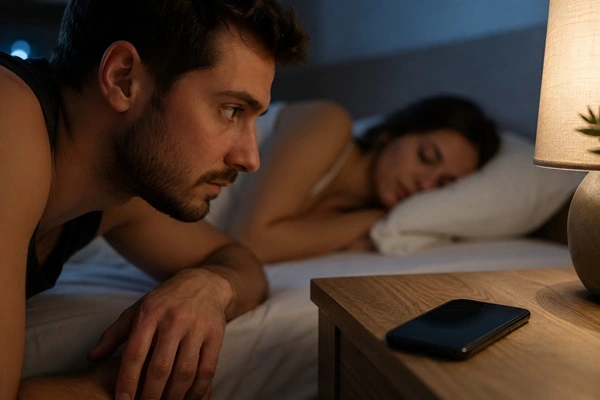
Suspecting that your partner may be cheating is one of the most difficult situations anyone can face. It often starts with something small: unusual behavior, a phone that never leaves their hand, sudden changes in routine, or excuses that simply don’t feel convincing. Little by little, those doubts can become impossible to ignore.
The problem is simple: suspicion is not proof.
Driven by anxiety, frustration, or anger, many people make mistakes that only make the situation worse. Some confront their partner immediately without any real evidence. Others secretly check their phone in a panic and end up getting caught. Some rely on opinions from friends or family, while others make life-changing decisions based entirely on instinct.
In most cases, none of these approaches provide the answers they’re looking for. They simply create more stress, more arguments, and even more uncertainty.
Before jumping to conclusions, it’s much smarter to slow down, observe the facts, and determine whether there is actually anything that supports your suspicions.
Every situation is different.
Sometimes the warning signs turn out to be nothing more than misunderstandings. Other times, several seemingly insignificant details begin to form a much clearer picture.
The purpose of this guide isn’t to encourage distrust or fuel jealousy. It’s to help you approach the situation calmly, objectively, and with the right mindset.
In the following chapters, you’ll learn which behaviors may justify further attention, the most common mistakes people make, how to gather information discreetly, and which monitoring technologies may be useful depending on your specific situation.
Because there is no single solution that works for everyone.
In some cases, paying closer attention to everyday behavior may be enough to clear your doubts. In others, professional tools such as monitoring smartphones, GPS trackers, audio surveillance devices, voice recorders, or hidden cameras may provide the information you’re looking for. The right choice always depends on what you need to verify and the circumstances you’re dealing with.
The ultimate goal is simple: separate suspicion from facts, avoid impulsive decisions, and choose the solution that best fits your situation when additional verification is truly necessary.
Who Is This Guide For?
This guide is designed for anyone who wants to determine whether their concerns are justified and better understand the monitoring technologies available today, without wasting time or money on solutions that don’t fit their specific needs.
- ✔ People who suspect a partner may be cheating.
- ✔ Anyone trying to understand unusual behavior within their family.
- ✔ Private investigators and security professionals.
- ✔ Businesses looking to protect confidential information and sensitive assets.
- ✔ Anyone who wants to understand the differences between monitoring smartphones, GPS trackers, audio surveillance devices, voice recorders, hidden cameras, and directional microphones.
When Does a Suspicion Become a Real Concern?
When you begin to suspect that your partner may be cheating, it’s easy to start connecting every little detail. A late arrival suddenly seems suspicious, an unexpected phone call feels different, and a text message received late at night can quickly become a source of anxiety.
That’s a completely natural reaction.
When you truly care about someone, even small changes in their behavior can raise questions. The problem is that emotions can easily cloud your judgment, making it difficult to separate what you feel from what is actually happening.
Suspicion is not evidence.
Jealousy is not evidence.
A gut feeling is not evidence.
No matter how strong your intuition may be, it’s not enough to reach a conclusion.
This doesn’t mean your concerns are necessarily wrong. It simply means that before confronting your partner or making important decisions, it’s worth taking a step back and looking at the situation objectively.
One of the biggest mistakes people make is searching only for information that confirms what they already believe. It’s a common psychological bias that can lead you to misinterpret perfectly ordinary behavior as proof that something is wrong.
One unusual event rarely means anything on its own.
The picture changes when unusual behaviors begin to repeat over time. Sudden changes in daily routines, constant excuses that don’t quite add up, a phone that suddenly becomes off-limits, frequent unexplained outings, or other unexpected changes may start to reveal a pattern rather than a coincidence.
That’s why the best advice is simple: don’t look for confirmation—look for facts.
It’s repeated patterns of behavior, not isolated incidents, that help distinguish normal relationship concerns from suspicions that deserve a closer look.
At This Stage, Avoid:
- ❌ Accusing your partner without solid evidence.
- ❌ Letting anxiety convince you that every unusual behavior is proof of cheating.
- ❌ Sharing your suspicions with friends or relatives too soon, where emotions often outweigh objective advice.
- ❌ Making important decisions based only on feelings instead of facts.
In the next chapters, we’ll look at the most common warning signs that deserve your attention when they appear consistently over time. None of them prove infidelity on their own, but together they may help you understand whether your concerns are justified.
The Most Common Signs You Shouldn’t Ignore
Anyone who suspects their partner of cheating usually asks the same question:
“Am I imagining things, or is something really going on?”
There isn’t a single behavior that automatically proves someone is being unfaithful. People change for many reasons, including work pressure, stress, family problems, or personal challenges.
What really matters is whether several unusual behaviors begin to appear together and continue over time.
Remember: one isolated event rarely means much. Several recurring signs, however, deserve closer attention.
Sudden Changes in Behavior
People naturally change throughout life, but when someone’s personality, habits, or attitude shift dramatically without an obvious reason, it’s understandable to wonder why.
A partner who was once affectionate may suddenly become emotionally distant, less interested in spending time together, or begin behaving very differently from just a few weeks earlier.
On its own, this doesn’t prove anything, but it’s often the first sign that causes people to notice other unusual behaviors.
Their Phone Suddenly Becomes Off-Limits
Today, much of our personal life revolves around our smartphones, so a certain level of privacy is perfectly normal.
The situation becomes different when the phone suddenly turns into something that can never be left unattended. New passwords, hidden notifications, keeping the phone face down, taking it everywhere—including the bathroom—or becoming unusually defensive whenever someone touches it may indicate a change in behavior.
That said, privacy should never be confused with proof of infidelity. Every relationship has different boundaries, and these behaviors should always be considered within the broader context.
Unusual Work Hours and New Routines
Unexpected overtime, frequent business dinners, last-minute meetings, or regularly coming home much later than usual may all have perfectly legitimate explanations.
However, when these situations become routine and the explanations seem increasingly vague or inconsistent, it’s reasonable to ask whether something else has changed.
Unexplained Spending
Frequent cash withdrawals, unfamiliar credit card charges, missing receipts, or unusual purchases can naturally raise questions.
By themselves they don’t prove anything, but when combined with other changes, they may help complete the overall picture.
Less Interest in the Relationship
Every relationship goes through periods of greater or lesser intimacy.
When emotional distance or a sudden loss of sexual interest appears alongside several other changes, many people begin to feel that something is different.
It’s important not to mistake temporary stress for infidelity—but it’s equally important not to ignore a long-term change in the relationship.
Changes in Online and Social Media Behavior
Digital habits often change as well.
New social media accounts, increased secrecy, spending significantly more time on a smartphone, frequently deleting conversations, or unexpectedly changing passwords may all indicate a greater desire for privacy. While none of these behaviors prove infidelity, they may become more meaningful when observed alongside other recurring warning signs.
What Now? How to Separate Suspicion from Facts
When you begin to suspect that your partner may be cheating, it’s easy to let your emotions take control. Anger, disappointment, fear, and confusion often lead people to make impulsive decisions that usually make the situation even worse.
People rarely uncover the truth because of a sudden intuition. More often, they succeed because they stay patient, observe the facts, and avoid making mistakes during the most emotional moments.
Here are some of the most common mistakes to avoid.
Confronting Your Partner Too Soon
This is probably the most common mistake.
As soon as suspicion appears, many people feel the need to demand answers immediately. The problem is that without real evidence, the conversation almost always turns into an argument based on assumptions rather than facts.
If your suspicions turn out to be wrong, you may seriously damage the relationship. If your partner is actually hiding something, confronting them too early often gives them the opportunity to become more careful and cover their tracks.
Making Accusations Without Evidence
Saying things like “I know you’re cheating on me” or “Just tell me the truth” without having any real proof rarely ends the way people hope.
Instead, it often gives the other person time to change their behavior, erase information, or become much more cautious, making it even harder to understand what’s really happening.
Before having any serious conversation, it’s always better to understand the situation as clearly as possible.
Obsessing Over Every Detail
Once anxiety takes over, it’s easy to start checking everything: the phone, social media activity, schedules, messages, or every small change in daily routine.
The danger is that you begin seeing confirmation everywhere, interpreting every unusual behavior as proof that your suspicions are correct.
Paying attention is useful. Becoming obsessed almost always clouds your judgment.
Telling Friends and Family Too Soon
Talking to someone you trust can certainly help relieve stress, but asking too many people for advice often creates even more confusion.
Everyone has their own experiences, opinions, and personal biases. Before long, you’re no longer evaluating the facts—you’re reacting to everyone else’s interpretation of the situation.
When dealing with something this personal, facts are far more reliable than opinions.
Making Life-Changing Decisions Too Quickly
Ending a relationship, moving out, filing for divorce, or making any major decision based only on suspicion can have consequences that are difficult—or impossible—to undo.
Before taking any important step, give yourself time to gather reliable information and evaluate the situation with a clear mind.
The Most Important Advice
If you truly feel that something isn’t right, don’t let emotions control your decisions. Stay calm, pay attention to recurring behaviors, keep track of the facts, and avoid jumping to conclusions. In many cases, patience is what separates a simple suspicion from a situation that genuinely deserves a closer look.
The Hardest Part? Staying Calm
When you suspect your partner may be cheating, staying calm is often the hardest part.
Your mind starts working overtime. Every phone call, every late arrival, every text message, or every unexpected change in routine suddenly feels like proof that something is wrong. The more you think about it, the harder it becomes to separate reality from fear.
That’s a completely normal reaction.
When you love someone and you’re afraid of losing them, your brain naturally starts searching for answers. The problem is that strong emotions often make us see what we expect to see instead of what’s actually happening.
Never make important decisions when you’re angry, hurt, or scared.
Those are exactly the moments when people are most likely to make mistakes they’ll later regret.
Some people confront their partner immediately. Others begin checking every movement, every message, every social media profile, or spend hours looking for explanations that may not even exist.
Most of the time, all of this has only one effect: it increases stress and anxiety.
If you genuinely want to understand what’s happening, try doing the exact opposite. Slow down. Observe. Give yourself a little time to look at the situation more objectively.
That doesn’t mean ignoring your feelings. It simply means refusing to let your emotions make important decisions for you.
Take a Moment and Ask Yourself
- • Am I reacting to actual facts or just a feeling?
- • Is this behavior really unusual, or has it happened before?
- • Have I noticed one isolated incident, or several recurring changes over time?
- • Am I looking for answers—or just looking for confirmation of what I already believe?
It may seem like a small distinction, but it completely changes the way you approach the situation.
People looking for confirmation usually find it everywhere. People looking for answers pay attention to facts instead of assumptions.
Keep This in Mind
If your suspicions are justified, waiting another day or two won’t change the outcome. If they’re not, reacting impulsively could seriously damage a relationship that may simply need better communication and understanding.
Only when you manage to stay calm can you begin observing the situation objectively. And that’s exactly when it becomes possible to separate emotions from facts.
Lower Your Stress Before You Do Anything Else
High stress changes the way your brain processes information. When emotions take over, it’s much easier to misinterpret ordinary situations as evidence of cheating. Before making any important decision, take a few hours to clear your mind.
- 🚶 Go for a 30-minute walk, preferably outdoors.
- 🏃 Exercise if you can. A workout, a run, or even a long bike ride can help reduce stress and improve mental clarity.
- 🫁 Spend a few minutes focusing on slow, deep breathing. It can quickly reduce anxiety and help you think more clearly.
- 😴 If you haven’t slept well, postpone any important decisions until you’ve had proper rest. Fatigue often leads to poor judgment.
- 📵 Resist the urge to constantly check your partner’s phone, social media, or location. The more you check, the more anxious you’ll become.
- 📝 Write down the facts you’ve observed. Putting them on paper helps separate objective information from emotional reactions.
Taking a few hours to regain your composure doesn’t mean ignoring the problem. It means giving yourself the best chance to deal with it rationally instead of emotionally.
At this point, a very natural question comes to mind:
How can you gather information discreetly without making the mistakes we’ve just discussed?
In the next chapter, we’ll look at the most effective ways to observe a situation objectively and, when necessary, which monitoring tools can actually help you find the answers you’re looking for.
How to Gather Information Without Letting Emotions Take Over
Once you’ve noticed a few unusual behaviors, the natural reaction is to look for answers as quickly as possible. That’s completely understandable. However, this is also the moment when patience becomes most important.
The goal isn’t to prove that your partner is cheating at all costs. The goal is to understand what’s actually happening.
The best approach is surprisingly simple: observe the facts before trying to interpret them.
Focus on Facts, Not Feelings
Strong emotions can make us see connections that don’t really exist. That’s why it’s important to separate what you’ve actually observed from what you think might have happened.
Write Down Unusual Events
Memory isn’t always reliable, especially during stressful situations.
Keeping notes of dates, times, and unusual events makes it much easier to reconstruct what actually happened. Over time, you’ll be able to tell whether you’re looking at isolated incidents or recurring patterns.
Pay Attention to Daily Routines
Sometimes the most useful information comes from simply observing everyday habits.
Changes in work schedules, unexpected late nights, recurring appointments, or sudden changes in routine may reveal patterns that would otherwise go unnoticed.
One late evening means very little. Ten late evenings that happen every Tuesday may deserve a closer look.
Observe Changes in Movement and Routine
Changes in someone’s daily routine can sometimes provide useful context.
Visiting unfamiliar places, taking different routes home, or spending much more time away from home than usual doesn’t automatically mean anything is wrong. However, when these changes become consistent, they may help you better understand what’s happening.
Document Facts, Not Assumptions
Whenever you come across information that you believe may be important, document only what actually happened.
Receipts, calendar entries, photographs, or other objective information are always more reliable than memories, assumptions, or emotional reactions.
Avoid treating every unusual detail as proof of infidelity.
Don’t Rush to Find Answers
One of the biggest differences between people who eventually understand the situation and those who become even more confused is patience.
Individual events rarely tell the whole story. It’s only when several consistent facts begin to fit together that a clearer picture starts to emerge.
Always Remember
Observing a situation doesn’t mean invading someone’s privacy or jumping to conclusions. It means gathering objective information before making decisions that could have a significant impact on your relationship and your future.
If simple observation isn’t enough and questions still remain, several professional technologies can help you better understand the situation. The right solution always depends on the type of information you’re trying to verify.
Which Solution Is Right for Your Situation?
Every situation is different. That’s why there isn’t one device that’s best for everyone. The right choice depends entirely on the type of information you’re trying to obtain.
The table below will help you quickly identify the most suitable technology for your specific needs.
| If You Want To… | Recommended Solution | Why | Suggested Product |
|---|---|---|---|
| 📍 Know where someone is going. | GPS Tracker | Tracks locations, movements, and travel history. | GPS-CELL |
| 📱 Monitor activity on a smartphone. | Monitoring Smartphone | Provides access to calls, messages, chats, GPS location, and other device activity. | Spy Phone |
| 🎙️ Listen to conversations remotely. | GSM Audio Bug | Streams live audio through the cellular network. | GSM-BUG |
| 📡 Operate where there’s no cellular or internet coverage. | Analog Radio Bug | Provides reliable radio transmission using a dedicated receiver. | ENRMK-129 |
| 🔐 Protect highly sensitive communications. | Encrypted Digital System | Professional encrypted audio transmission. | ENDIGIT-128 |
| 🎧 Record conversations for later review. | Digital Voice Recorder | Records many hours of audio while consuming very little power. | PICO2 Recorder |
| 📷 Capture video inside a room. | Hidden Camera | Records or streams discreet video and audio. | Falcon 4G |
| 🎯 Listen from a long distance without entering the area. | Directional Microphone | Captures conversations from long distances depending on the model used. | EAGLE |
Not Sure Which Technology You Need?
In the following chapters we’ll examine each of these solutions in detail, explaining when they’re most effective, their strengths, and the situations where another technology may be a better choice.
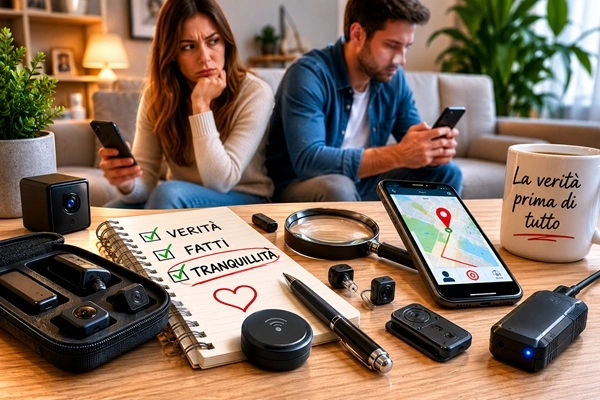
Monitoring Smartphones: When Are They the Right Choice?
Many people assume that a monitoring smartphone is designed exclusively to catch a cheating partner. In reality, it’s a much more versatile tool used in many different situations, including parental control, protecting children and elderly family members, managing company-owned devices, employee monitoring, and verifying activity performed on a smartphone.
Unlike a traditional listening device, a monitoring smartphone does much more than capture audio. It can collect a wide range of information directly from the device, including phone calls, text messages, messaging apps, social media activity, GPS location, location history, photos, videos, files, web activity, and much more, providing a complete overview of how the phone is being used.
Because it combines so many monitoring functions into a single device, it has become one of the most comprehensive solutions available whenever the focus is on smartphone activity rather than simply monitoring a location or recording conversations.
Unlike an audio bug or a GPS tracker, a monitoring smartphone lets you see not only where someone has been, but also much of what they have been doing on the device itself, including calls, messages, chats, social media activity, photos, browsing history, and GPS movements.
For this reason, it’s often the best choice when your main concern involves digital communications rather than conversations taking place inside a room.
When It’s the Best Choice
- ✔ You want to know who someone is communicating with.
- ✔ You need to monitor messages, chats, and social media activity.
- ✔ You want access to GPS location history and travel routes.
- ✔ You need to monitor overall smartphone activity.
- ✔ You’re looking for one solution that combines multiple monitoring features.
When It’s NOT the Best Choice
- ✘ You need to listen to conversations inside a room where smartphones cannot be placed.
- ✘ You need to monitor an office, home, or vehicle without relying on a smartphone.
- ✘ You require extremely long audio recording times.
- ✘ You need to listen to conversations from hundreds of feet away without internet or cellular service.
In these situations, dedicated technologies such as audio bugs, digital voice recorders, GPS trackers, or directional microphones are often a much better choice because they are specifically designed for those applications.
Learn More About Monitoring Smartphones
Explore our complete range of professional monitoring smartphones, compare their features, and discover which solution best fits your specific needs.
GPS Trackers: When Are They the Right Choice?
If your main concern is knowing where someone has been or where they are right now, a GPS tracker is often the most effective solution.
Unlike an audio bug or a monitoring smartphone, a GPS tracker isn’t designed to record conversations, access messages, or monitor chats and social media. Its job is simple: accurately determine the device’s location and record its movements over time.
Modern GPS trackers can display a device’s real-time location, store detailed route history, create virtual boundaries known as geofences, and send instant alerts whenever the tracker enters or leaves a predefined area.
Because of these capabilities, GPS trackers are widely used not only during private investigations, but also for fleet management, vehicle security, asset protection, and monitoring authorized individuals in a variety of professional and personal situations.
When It’s the Best Choice
- ✔ You want to know where a person or vehicle has been.
- ✔ You need to review travel history and daily routes.
- ✔ You want automatic alerts when the device enters or leaves a specific area.
- ✔ You need accurate real-time location tracking.
- ✔ You’re looking for a solution with long battery life and extended operating time.
When It’s NOT the Best Choice
- ✘ You want to know who someone is communicating with.
- ✘ You need to listen to conversations inside a room.
- ✘ You need to record audio or video.
- ✘ You want to monitor calls, messages, chats, or social media activity.
In these situations, a monitoring smartphone, audio surveillance device, digital voice recorder, or hidden camera will usually provide much more useful information, depending on what you’re trying to verify.
Learn More About GPS Trackers
Explore our complete range of professional GPS tracking devices and discover the technologies available for monitoring vehicles, people, and valuable assets in real time.
Audio Surveillance Devices: When Are They the Right Choice?
If your goal is to listen to conversations taking place inside a room, office, vehicle, or any other location, an audio surveillance device is often the most effective solution.
Unlike a GPS tracker, which only shows a person’s location, or a monitoring smartphone, which gathers information from the phone itself, an audio surveillance device allows you to hear exactly what’s happening inside the monitored area.
Today there are several transmission technologies available, each designed for different operational needs. Choosing the right one depends on factors such as listening distance, the availability of cellular or internet coverage, battery life, and the level of security required.
When It’s the Best Choice
- ✔ You need to listen to conversations in real time.
- ✔ You want to monitor an office, home, meeting room, or vehicle.
- ✔ You need to know exactly what’s being said inside a specific location.
- ✔ You’re looking for a discreet and professional monitoring solution.
When It’s NOT the Best Choice
- ✘ You need to track someone’s location.
- ✘ You want to monitor calls, text messages, chats, or social media activity.
- ✘ You need to record video.
- ✘ You simply want to record a conversation for later listening instead of monitoring it live.
When to Choose a GSM audio surveillance device
GSM audio monitoring devices are the best option when you need to listen to conversations from virtually anywhere. They use the cellular network, allowing you to monitor audio remotely by simply calling the device, as long as cellular coverage is available.
When to Choose a Radio wireless listening device
Analog radio listening devices are ideal when you don’t want to rely on cellular networks or internet access. They communicate directly with a dedicated receiver and are widely used in professional investigations because of their excellent audio quality, reliable transmission, and ability to operate in locations where other technologies may not be practical.
There are also encrypted digital systems, Wi-Fi audio bugs, and several other professional technologies designed for specific applications. Each offers different advantages depending on the environment, transmission range, and level of security required.
Learn More About Audio Surveillance Technologies
Want to understand the differences between GSM, 4G, Wi-Fi, analog radio, encrypted digital systems, and directional microphones? Our complete guide compares the most common long-range audio surveillance technologies, explaining when each one is the best choice.
Digital Voice Recorders: When Are They the Right Choice?
In many situations, a digital voice recorder is a better option than a live audio surveillance device. The right choice depends entirely on the type of information you want to collect.
While an audio surveillance device lets you listen to conversations in real time, a professional voice recorder stores the audio internally so it can be reviewed later. This makes it ideal when live monitoring isn’t necessary and your priority is recording conversations discreetly over long periods of time.
Because they don’t continuously transmit audio, digital voice recorders typically offer much longer battery life and can operate for hours—or even days—depending on the model and recording mode selected.
When It’s the Best Choice
- ✔ You want to record conversations without listening live.
- ✔ You need many hours or even days of continuous recording.
- ✔ You’re looking for a compact device that’s easy to conceal.
- ✔ You don’t need cellular, Wi-Fi, or internet connectivity.
- ✔ You prefer retrieving and reviewing recordings later.
When It’s NOT the Best Choice
- ✘ You need to listen to conversations in real time.
- ✘ You may need to react immediately to what’s happening.
- ✘ You want to monitor a location remotely without physically retrieving the device.
Why Choose a mini voice recorder?
The biggest advantage of a mini voice recorder is its battery life. Since it isn’t constantly transmitting audio, power consumption is significantly lower than that of live audio surveillance devices, allowing much longer recording times.
Another major advantage is how easy these devices are to conceal. Their compact size makes them simple to hide inside everyday objects, bags, clothing, vehicles, offices, or almost any location where installing a live transmitter would be impractical.
Many professional models also include Voice Activation (VOX), a feature that automatically starts recording only when voices or sounds are detected. This extends battery life, saves storage space, and makes reviewing recordings much faster and more efficient.
Learn More About Professional Digital Voice Recorders
Compare recording time, storage capacity, VOX activation, dimensions, and other professional features to find the digital voice recorder that best fits your needs.
Hidden Cameras: When Are They the Right Choice?
In some situations, listening to a conversation simply isn’t enough. Knowing who enters a room, who someone meets, or what actually happens inside a specific location can be far more valuable than audio alone.
That’s where a hidden camera becomes the best solution. Unlike audio surveillance devices, hidden cameras capture images and video, giving you visual documentation of what actually took place.
Today, professional hidden cameras are available in Wi-Fi, 4G, and IP versions, as well as models concealed inside everyday objects, making it possible to choose the right solution for almost any monitoring scenario.
When It’s the Best Choice
- ✔ You want to see who enters or leaves a room.
- ✔ You need visual documentation through photos or video recordings.
- ✔ You want to monitor a home, office, warehouse, or vehicle.
- ✔ You need live video streaming over Wi-Fi or 4G.
- ✔ You want visual evidence in addition to any available audio.
When It’s NOT the Best Choice
- ✘ Your only goal is to listen to conversations.
- ✘ You need maximum battery life.
- ✘ You want to track someone’s location.
- ✘ You need to monitor phone calls, chats, or smartphone activity.
Why Choose a Hidden Camera?
The biggest advantage of a hidden camera is the ability to capture visual evidence. In many situations, seeing what actually happened provides a much clearer understanding than listening to audio alone.
Modern professional hidden cameras often include motion detection, automatic recording, night vision, Wi-Fi or 4G connectivity, and remote access from a smartphone or computer, allowing you to monitor a location from virtually anywhere.
Things to Consider
Compared with an audio surveillance device or a digital voice recorder, hidden cameras generally consume more power and generate much larger amounts of data. To achieve the best image quality, it’s also important to carefully choose the installation point, camera angle, and available lighting.
Learn More About Hidden Cameras
Explore our complete range of professional hidden cameras, compare Wi-Fi, 4G, and IP models, and discover discreet devices concealed inside everyday objects to find the solution that best fits your needs.
There Isn’t Always Just One Solution
Hiring a private investigator isn’t always necessary. At the same time, trying to handle everything yourself isn’t always the best approach either.
The right choice depends on the type of information you need, the complexity of the situation, and how much time and effort you’re willing to invest.
In many cases, carefully observing recurring behavior and using the right technology is enough to answer your questions. In more complex situations, however, the experience of a professional investigator may become invaluable.
When You Can Handle It Yourself
- ✔ You simply want to clarify your initial concerns.
- ✔ You need to determine whether certain behaviors are recurring.
- ✔ You want more information before making important decisions.
- ✔ The situation only involves your personal relationship.
When Hiring a Private Investigator May Be the Better Choice
- ✔ You need professional surveillance and legally documented evidence.
- ✔ The situation is particularly complex.
- ✔ Multiple people, locations, or long-distance movements are involved.
- ✔ You need evidence collected according to applicable legal procedures.
These two approaches aren’t mutually exclusive. Many people begin by gathering basic information on their own and later decide whether professional investigative services are necessary.
What If You’re the One Being Monitored?
Not every concern is about discovering infidelity.
Sometimes the real question is whether you are being monitored.
If you believe your home, office, vehicle, or workplace may contain hidden surveillance devices, unauthorized trackers, or covert listening equipment, buying surveillance equipment isn’t the answer. What you need is a Professional Electronic Sweep (TSCM Bug Sweep).
A professional Technical Surveillance Counter-Measures (TSCM) inspection can detect hidden cameras, audio bugs, GPS trackers, radio transmitters, and many other types of covert surveillance equipment using specialized professional instruments.
Think Someone Is Monitoring You?
If your concern isn’t gathering information but determining whether someone is secretly monitoring your activities, a professional electronic sweep is the most effective way to detect hidden surveillance devices.
You Discovered the Truth. What Happens Next?
If you’ve made it this far, chances are you weren’t simply looking for information about surveillance devices or monitoring technology. You’re probably going through one of the most difficult moments of your life.
Discovering that your partner has been unfaithful is painful. It can leave you feeling angry, betrayed, humiliated, and overwhelmed by questions that never seem to stop. Those emotions are completely normal. What matters now is making sure they don’t make your decisions for you.
Rule Number One: Don’t React Immediately
Give yourself time. Even one night’s sleep can completely change the way you approach the situation. Decisions made in the middle of anger or emotional shock are often the ones people regret the most.
Make Sure You Understand the Whole Picture
Even if you believe you’ve uncovered the truth, resist the temptation to jump to conclusions.
Review what you’ve learned, put the events in order, and make sure you understand the context. The clearer your understanding of the situation, the better your decisions will be.
Avoid Rash Decisions
Calling your partner in the middle of the night, confronting them in public, posting emotional messages on social media, or involving friends and family rarely improves the situation.
The more emotionally charged things become, the more important it is to stay in control. There will be time to talk—but only when you’re ready to do so calmly.
Don’t Let Anger Control You
Anger is one of the hardest emotions to manage after discovering infidelity. Feeling angry is completely normal. Acting aggressively is not.
If you feel like you’re losing control, remove yourself from the situation. Go for a walk, exercise, spend time with someone you trust, or simply give yourself a few hours to calm down before doing anything else.
Never Forget This
No act of infidelity is worth your freedom, your health, or your future. One impulsive decision can have consequences far more serious than the betrayal itself and may change your life forever.
Ask Yourself What You Really Want
Before making any decision, take a moment to answer one simple question:
- • Do you want to know the complete truth?
- • Do you want to try rebuilding the relationship?
- • Have you already decided to end it?
- • Or do you simply need to understand what actually happened?
There isn’t one answer that’s right for everyone. The right answer is the one you’ll still be comfortable with months from now—not just tomorrow.
Have the Conversation When You’re Ready
Eventually, there will probably be a conversation.
When that moment comes, try to stay calm. Listen carefully, ask clear questions, and avoid interrupting. Even if the relationship ultimately ends, handling that conversation with dignity and self-control will leave you with far fewer regrets.
The Most Important Lesson in This Guide
Don’t look for confirmation. Look for the truth.
The difference is enormous. People looking for confirmation find “proof” everywhere. People looking for the truth stay calm, evaluate the facts, and make decisions only after they fully understand the situation.
Whatever the outcome, remember one thing: what happened does not define your value as a person. Relationships change, people make mistakes, and sometimes they come to an end. Your ability to face difficult moments with dignity, self-control, and clear judgment will always matter far more than someone else’s choices.
What If You Discover That Your Partner Isn’t Cheating?
Throughout this guide we’ve talked about suspicions, warning signs, monitoring technologies, and ways to verify what is really happening. But there’s one outcome that receives far less attention—and it’s probably the one everyone hopes for.
Finding out that your partner isn’t cheating.
When anxiety takes over, it’s easy to focus only on the worst-case scenario. Every unusual behavior starts looking like confirmation, and people often forget that there may be absolutely nothing to discover.
Finding the Truth Is Never a Waste
If, after carefully verifying the situation, you discover that your concerns were unfounded, don’t think you’ve wasted your time or money.
You’ve achieved exactly what you were looking for: peace of mind—without damaging your relationship through false accusations, unnecessary arguments, or emotional confrontations that could have caused lasting harm.
Many relationships don’t end because of infidelity. They end because suspicion grows unchecked until one partner starts accusing without evidence and seeing proof where none exists.
Peace of Mind Has Real Value
Taking the time to verify the situation allows you to move forward without constantly wondering whether something is wrong.
You can enjoy your relationship again without carrying the burden of uncertainty that, over time, can become far more damaging than the suspicion itself.
That’s a Victory Too
Many people believe the best possible outcome is discovering infidelity. It isn’t. The best outcome is discovering the truth—whatever that truth may be. If you learn that your partner has been honest and your suspicions were unfounded, your investigation wasn’t money wasted. It was an investment in your peace of mind. You eliminated a doubt that might otherwise have stayed with you for months—or even years—and tonight you’ll probably sleep a little better… at least for now.
Ultimately, this guide isn’t about teaching people to distrust their partners. It’s about helping you make informed decisions based on facts instead of emotions. Sometimes the truth is painful. Other times it brings enormous relief. Either way, knowing the truth is always better than living with uncertainty.
Frequently Asked Questions About Infidelity and Monitoring Technologies
Below you’ll find answers to the most common questions about infidelity, warning signs, and the different monitoring technologies available today. Remember that every situation is unique, and no single behavior should ever be considered proof of cheating on its own.
How can you tell if your suspicion of cheating is justified?
A suspicion alone is never proof. Changes in someone’s behavior can have many different causes, including work-related stress, personal problems, or simply a difficult period in their life.
Before jumping to conclusions, pay attention to whether certain behaviors continue over time and whether they appear together with other consistent warning signs.
Only by gathering objective information can you distinguish a simple concern from a suspicion that truly deserves further investigation.
What are the most common signs of possible infidelity?
There is no single behavior that automatically proves someone is cheating. However, certain changes may deserve closer attention when several of them begin appearing together.
- Greater secrecy with their smartphone.
- Sudden changes in daily routines or schedules.
- Less interest in the relationship.
- Unusual spending habits.
- Changes in online or social media behavior.
- Frequent unexplained absences.
Should you confront your partner as soon as you suspect cheating?
In most situations, it’s better not to confront your partner immediately. When emotions like anger, fear, or disappointment take over, conversations often become arguments without providing any real answers.
Taking a little time to observe the situation more carefully allows you to approach the conversation with a clearer mind and better information. If your suspicions turn out to be unfounded, you’ll avoid damaging the relationship unnecessarily. If they’re justified, you’ll be much better prepared to deal with the situation.
What’s the best way to gather information without making mistakes?
The best approach is to observe the facts calmly instead of rushing to conclusions.
Keeping notes about dates, schedules, recurring behaviors, movements, or other objective details can help you better understand what’s actually happening over time.
Avoid impulsive actions, making accusations without evidence, or letting emotions dictate your decisions. The more objective the information you collect, the easier it becomes to evaluate the situation accurately.
What’s the difference between an audio surveillance device and a digital voice recorder?
The main difference is how the audio is captured.
An audio surveillance device lets you listen to conversations in real time while they’re happening. A digital voice recorder, on the other hand, stores the recordings internally so they can be reviewed later.
If you need live monitoring, an audio surveillance device is generally the better choice. If your priority is recording many hours of audio with maximum battery life, a digital voice recorder is usually the more practical solution.
When should you choose a GSM audio bug?
A GSM audio bug is the ideal solution when you need to listen to conversations in real time from virtually any location.
Using a standard SIM card, it transmits live audio through the cellular network, allowing you to monitor the environment wherever cellular coverage is available.
It’s one of the most popular solutions for remotely monitoring homes, offices, warehouses, and vehicles, especially when you can’t be physically present at the location.
When is a monitoring smartphone the best choice?
A monitoring smartphone is the right solution when your goal isn’t to listen to conversations inside a room but to monitor activity taking place directly on the phone itself.
These devices can collect information such as phone calls, text messages, chats, social media activity, GPS location, location history, photos, videos, browsing activity, and much more.
If your objective is to monitor conversations inside a room or another physical location, an audio surveillance device is generally a more appropriate choice.
When should you use a GPS tracker?
A GPS tracker is the ideal solution when your goal is to monitor the movements of a person or vehicle.
It allows you to view the device’s real-time location, review travel history, and receive automatic alerts whenever it enters or leaves predefined geographic areas.
If your objective is to listen to conversations, monitor smartphone activity, or record audio, you’ll need a different technology designed specifically for those purposes.
Do hidden cameras record audio as well?
That depends on the model.
Many professional hidden cameras include a built-in microphone, allowing them to record both video and audio simultaneously. Others are designed exclusively for video recording.
If your primary goal is capturing conversations rather than video, an audio surveillance device or a digital voice recorder is usually the better solution.
Which device is the easiest to conceal?
The answer depends on the environment and the type of monitoring you need.
Digital voice recorders are generally the easiest devices to hide because of their extremely compact size and the fact that they don’t continuously transmit radio signals.
Many professional audio surveillance devices and hidden cameras are also available in miniature versions or concealed inside everyday objects, making them extremely difficult to detect.
Which device offers the longest battery life?
Battery life depends on the technology being used.
As a general rule, digital voice recorders consume much less power than live audio surveillance devices because they don’t continuously transmit audio. GPS trackers can often operate for weeks—or even months—depending on how frequently they report their location.
For this reason, it’s important to choose a device based not only on its features but also on the amount of operating time your application requires.
Is there one device that does everything?
No.
Every technology is designed for a specific purpose.
Audio surveillance devices capture conversations, GPS trackers monitor movement, hidden cameras record video, digital voice recorders store audio internally, and monitoring smartphones collect information directly from the device itself.
The best solution always depends on the question you’re trying to answer. That’s why it’s important to identify your objective first and then choose the technology that’s best suited to your specific needs.
When should you hire a private investigator?
Hiring a private investigator can be the best option when the situation is particularly complex, requires extended surveillance, or when professionally documented evidence is needed.
In many cases, however, it’s possible to clarify your concerns simply by carefully observing the facts or by using the most appropriate monitoring technology.
The right choice depends on the type of information you need, the complexity of the situation, and whether professional investigative services are truly necessary.
How can you tell if someone is monitoring you?
If you suspect that someone may be monitoring your activities, pay attention to unusual signs such as unexpected background noise during phone calls, unusually fast battery drain, unfamiliar devices attached to your vehicle, or abnormal smartphone behavior.
However, none of these signs automatically proves that surveillance equipment is present.
The only reliable way to determine whether hidden devices are actually being used is through a professional electronic sweep performed with specialized TSCM equipment.
When is a professional electronic sweep recommended?
A professional electronic sweep is recommended whenever you suspect your home, office, vehicle, or workplace may contain hidden listening devices, concealed cameras, GPS trackers, or other types of surveillance equipment.
Professional TSCM inspections use specialized instruments capable of detecting radio transmitters, GSM devices, hidden cameras, GPS trackers, wireless transmitters, and many other forms of covert surveillance that are extremely difficult to locate using consumer equipment.
Which monitoring technology is the most reliable?
There isn’t one technology that’s best for every situation.
Each solution is designed to accomplish a specific task.
Audio surveillance devices capture conversations, GPS trackers monitor movement, monitoring smartphones collect information directly from the phone, hidden cameras provide visual evidence, and digital voice recorders store conversations for later review.
The most reliable technology is simply the one that best matches the information you’re trying to obtain.
How do you choose the right monitoring solution?
Before choosing any device, ask yourself one simple question:
What information do I actually need?
- Want to know where someone goes? → GPS Tracker
- Need to listen to conversations? → Audio Surveillance Device
- Want to monitor calls, chats, and messages? → Monitoring Smartphone
- Need to record many hours of audio? → Digital Voice Recorder
- Want visual evidence? → Hidden Camera
- Need to listen from a long distance? → Directional Microphone
Starting with the right question is the easiest way to choose the most effective technology and avoid buying equipment that doesn’t meet your needs.
Is it possible to verify suspicions of infidelity without violating someone’s privacy?
In many situations, concerns can be clarified simply by observing behavior, collecting objective information, and evaluating the facts carefully.
Before taking any action, it’s important to understand and comply with the laws that apply in your country or jurisdiction, while respecting the privacy and legal rights of everyone involved.
If the situation is particularly sensitive or could have legal consequences, consulting a qualified professional is always the safest approach.
How long does it take to determine whether your suspicions are justified?
There isn’t one answer that applies to every situation.
Sometimes the truth becomes clear within a few days, while other situations require weeks of careful observation before any meaningful conclusions can be drawn.
One of the biggest mistakes people make is rushing to find an immediate answer. In many cases, patience is what allows you to distinguish a coincidence from a recurring pattern of behavior.
What’s the most common mistake people make when they suspect infidelity?
The biggest mistake is looking for confirmation instead of looking for the truth.
When emotions are involved, it’s easy to interpret every unusual behavior as proof that your suspicions are correct.
A better approach is to stay objective, observe the facts carefully, and avoid making accusations or life-changing decisions until you have a clear understanding of what’s actually happening.
How can you stay calm during such a difficult situation?
The first rule is simple: don’t make important decisions when you’re angry, hurt, or afraid.
Taking a few days to think, getting enough sleep, exercising, going for a walk, or talking with someone you trust can help you regain perspective and reduce emotional stress.
The best decisions are almost always made with a clear mind rather than in the middle of an emotional crisis.
What’s the most important advice before making any decision?
Don’t rush.
If your suspicions are correct, waiting another day or two is unlikely to change the situation. If they’re not, acting impulsively could seriously damage a relationship that might otherwise have been saved.
Always try to separate emotions from facts, and choose the most appropriate course of action only after you fully understand what’s really happening.
What is the ultimate goal of this guide?
The purpose of this guide isn’t to encourage distrust or teach people how to spy on their partners.
Its goal is to help you evaluate a difficult situation rationally, distinguish facts from assumptions, and make informed decisions instead of emotional ones.
Sometimes the truth is painful. Other times it’s reassuring. Either way, knowing the truth is almost always better than living with uncertainty.