
Endoacustica offers, Exclusive Customer Service and free Training

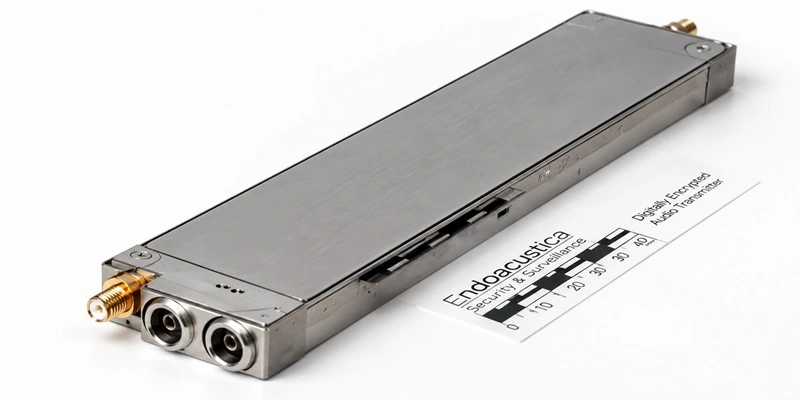
Digitally Encrypted Audio Transmitters
Digitally encrypted audio transmitters are professional devices designed to convert and transmit audio as a protected digital signal. Depending on the design, the audio can be processed using different digital transmission and encoding technologies, including encryption, frequency hopping, spectrum inversion, packet-based transmission and Adaptive Delta Modulation (ADM).
Unlike conventional analog transmitters, these systems process the audio signal before it is transmitted and require a compatible receiver or decoder to reconstruct the original audio. This approach allows the transmission method to be adapted to different requirements, including signal protection, transmission efficiency, audio quality and operating range.
Our range includes professional digital audio transmitters based on different technologies, from encrypted UHF systems and frequency-hopping transmission to packet-based digital transmission, spectrum inversion, ADM and power-line carrier systems.
Digitally encrypted audio transmitters are professional devices designed to convert and transmit audio as a protected digital signal. Depending on the design, the audio can be processed using different digital transmission and encoding technologies, including encryption, frequency hopping, spectrum inversion, packet-based transmission and Adaptive Delta Modulation (ADM)....
Unlike conventional analog transmitters, these systems process the audio signal before it is transmitted and require a compatible receiver or decoder to reconstruct the original audio. This approach allows the transmission method to be adapted to different requirements, including signal protection, transmission efficiency, audio quality and operating range.
Our range includes professional digital audio transmitters based on different technologies, from encrypted UHF systems and frequency-hopping transmission to packet-based digital transmission, spectrum inversion, ADM and power-line carrier systems.
Read More
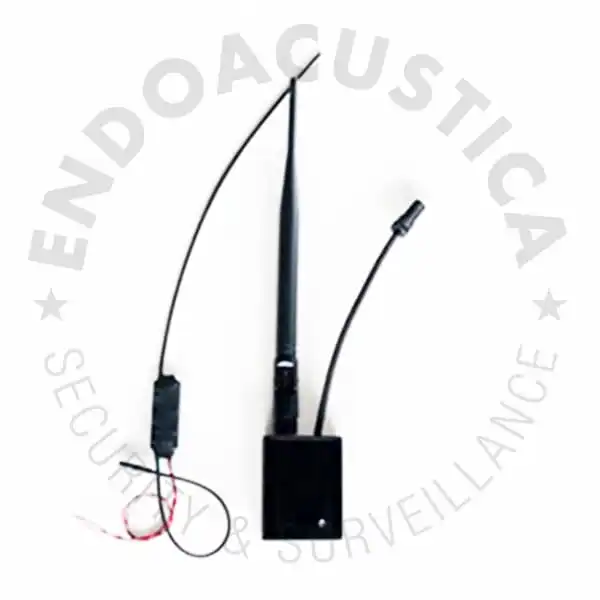
ENDIGIT-128 Encrypted Audio Transmitter
Encrypted UHF digital audio transmission system with dedicated receiver, up to 1 W RF output power, 128-bit signal encryption and 64 kHz / 16-bit audio sampling. Supports battery or 110–220 Vac operation.

DIGIT-2.4 Encrypted Stereo Audio Transmitter
Dual-microphone digital audio system with 44.1 kHz stereo transmission, unique transmitter ID and 100 ms frequency hopping. Up to 400 m open-field range with 7 dB directional panel antenna.

ENRMI-400 Digital Audio Transmitter
UHF digital audio transmitter with 30–250 ms packet intervals, internal RAM buffering and remote control. 50–400 mW RF output, 85 dB dynamic range, 50 Hz–10 kHz audio response and 3.6–4.5 Vdc supply.

FIBER-MIC Fiber Optic Microphone Sensor
Optical-fiber audio sensor with 10 km transmission range, EMI/RF immunity and a 10 mm microphone. High-sensitivity pickup for whispered audio in rooms up to 15 m², with 10 m fiber patch cord and 32 GB MicroSD storage.

Digital Audio Transmitter with ADM
Portable UHF digital audio transmitter using Adaptive Delta Modulation, with 100 mW RF output, crystal-stabilized frequency and external microphone. 3.7 V BL-5C battery provides up to 10 hours of continuous operation.

High-Power Spectrum Inversion Transmitter
Spectrum inversion audio transmitter with 500 mW RF output, external microphone and flexible antenna. 3.7 V BL-5C rechargeable battery, 2.9–4.3 Vdc external power input and dedicated spectrum inversion receiver included.
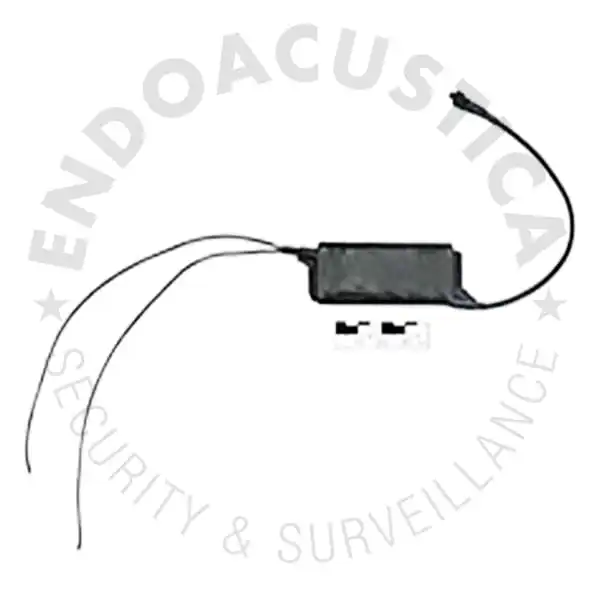
ENKPL-SD Power-Line Digital Transmitter
Digital audio transmitter using power-line carrier transmission over 220 Vac / 50 Hz wiring, with ADM conversion and three selectable subcarrier frequencies. Up to 3 transmitters can operate simultaneously, requires no battery.

ENRMD-200S Digital Stereo Audio Transmitter
Two-channel UHF digital audio system with analog-to-digital conversion, automatic mono/stereo switching, advanced noise filtering and independent channel separation. Adjustable RF output power and remote control.

ENDPK-010 Encrypted Audio Transmitter
Digital audio transmitter with 16-bit A/D conversion, audio data compression and crystal-stabilized RF transmission. 83 dB dynamic range, 200 Hz–14 kHz audio bandwidth, 2.2–6.5 Vdc supply and 20 mA max. consumption at 6 Vdc.

ENRMK-122I Spectrum Inversion Transmitter
Audio transmitter using WFM spectrum inversion, with 80 mW RF output power for reliable transmission in demanding conditions. Requires a compatible receiver with spectrum inversion decoding.
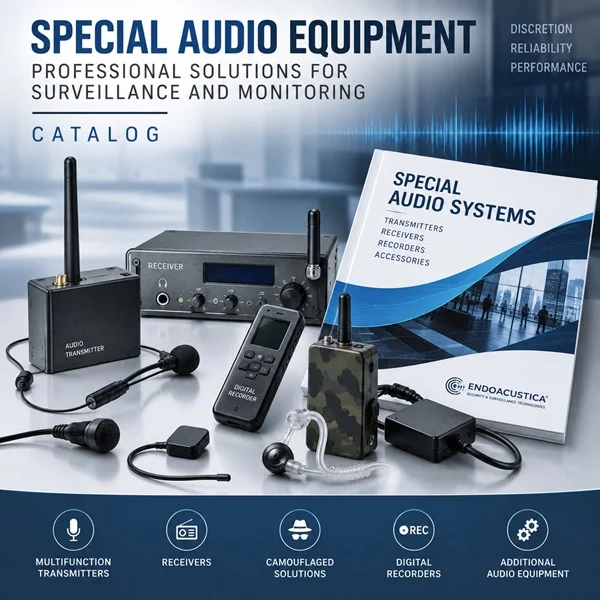
Special Digital Audio Equipment
Specialized audio equipment including multifunction digital and analog transmitters, camouflaged transmitters, digital and analog receivers, digital recorders and additional components for professional audio systems.
Digitally Encrypted Audio Transmitters: technical overview
How Digitally Encrypted Audio Transmission Works
Digitally encrypted audio transmitters convert microphone audio into digital data before transmission. Depending on the system, the signal can then be encrypted, frequency-hopped, processed using spectrum inversion, or transmitted as digital data packets. The corresponding receiver decodes the signal and reconstructs the original audio. Different transmission technologies provide different ways of protecting and managing the audio link.
Digital Audio Encryption
Digital audio encryption protects the audio signal by converting the transmitted data into an encrypted format. Only a compatible receiver with the correct decoding system can turn the encrypted signal back into the original audio.
Encryption adds an extra layer of protection to the audio transmission and can be combined with technologies such as frequency hopping or spectrum inversion. These technologies work differently, but they can be used together to make the audio link more secure.
Frequency Hopping Audio Transmission
Frequency hopping is a transmission technique in which the transmitter and receiver rapidly change between a predefined sequence of frequencies. Instead of remaining on a single radio frequency, the system follows a synchronized hopping pattern known to the compatible receiver.
The rapid changes in operating frequency make the signal more difficult to follow with conventional monitoring equipment. In professional systems, frequency hopping can also be combined with digital encryption to protect both the transmission method and the information being transmitted.
Spectrum Inversion Audio Transmission
Spectrum inversion changes the audio signal before it is transmitted. The transmitted signal no longer sounds like the original audio and cannot be properly understood without a compatible receiver.
The receiver reverses the process and restores the original audio. Unlike digital encryption, spectrum inversion changes the audio signal itself rather than encrypting the information.
For applications requiring this specific technology, Endoacustica also offers dedicated spectrum inversion audio transmitters with compatible receivers.
Packet-Based Digital Audio Transmission
Packet-based digital audio transmission divides the processed audio information into discrete blocks of digital data before transmission. Instead of maintaining a continuous transmission, the system sends data packets according to the communication protocol and timing parameters defined by the equipment.
The receiving unit identifies and processes the incoming packets and reconstructs the audio signal. Depending on the system, packet transmission can be combined with encryption, configurable transmission intervals and other methods of digital signal processing.
This technology is used in professional systems where the transmission method, power consumption and control of the radio signal are important design considerations.
A dedicated example is the ENRMI-400 digital packet-based audio transmission system, which uses configurable transmission intervals and a dedicated remote control.
Adaptive Delta Modulation (ADM)
Adaptive Delta Modulation (ADM) is a digital signal conversion technique used to represent an analog audio signal as digital data. The system follows changes in the audio waveform and represents these variations through a digital sequence suitable for transmission.
In professional audio transmitters, ADM allows the analog microphone signal to be converted into a digital format before transmission. The compatible receiver then performs the corresponding decoding process to reconstruct the audio.
ADM can therefore be considered a signal conversion technology rather than an encryption method. It can, however, be used within a system that also incorporates additional protection or specialized transmission techniques.
An example is the Adaptive Delta Modulation audio transmitter, designed specifically for digital audio transmission using ADM.
Digital Audio Transmission Over Power Lines
Power-line carrier transmission uses the electrical wiring of a building to carry the signal. Instead of transmitting the audio signal through a conventional radio link, the system transfers the digitally processed information over the electrical network.
This approach can be useful in installations where conventional radio-frequency transmission is unsuitable or where continuous operation is required. A transmitter connected to the electrical network can operate without relying on a battery, while a dedicated receiver extracts and processes the transmitted signal.
The ENKPL-SD digital power-line audio system uses this type of transmission and is designed for prolonged operation through the electrical network.
Digital Audio Transmitters and Dedicated Receivers
Many professional digital audio transmitters are designed to work with a dedicated receiver. Because the transmitted signal may be encrypted, digitally encoded, frequency-hopped or otherwise processed, it cannot be properly received and played back using a standard radio receiver.
The transmitter and receiver are designed to work together as a matched system. Depending on the model, the receiver may include channel selection, signal-level indicators, headphone and line outputs, and controls for tuning and audio monitoring.
Choosing a Digitally Encrypted Audio Transmitter
The most suitable digitally encrypted audio transmitter depends on the specific transmission technology and operating requirements. Important parameters include the type of digital processing, encryption or signal protection, transmission frequency, output power, audio bandwidth, power supply, operating time and compatibility with the receiver.
For this reason, there is no single digital transmitter that is suitable for every application. Endoacustica offers different systems based on encryption, frequency hopping, spectrum inversion, packet-based transmission, ADM and power-line carrier technology, allowing the equipment to be selected according to the technical requirements of the installation.
FAQ's
A digitally encrypted audio transmitter captures audio through a microphone, converts it into digital data, and processes the signal before transmission. A compatible receiver then decodes the transmitted signal and reconstructs the original audio.
An analog audio transmitter sends the audio signal directly using radio modulation. A digitally encrypted transmitter converts the audio into digital data before transmission and can use additional technologies such as encryption, frequency hopping or other digital signal-processing methods to protect and manage the transmission.
No. Many professional digitally encrypted audio transmitters communicate directly with a dedicated receiver and do not require a SIM card or an Internet connection. This allows them to operate independently of cellular networks.
Encrypted audio transmission means that the audio data is protected before it is transmitted. The signal is encoded so that it can only be properly decoded by compatible equipment using the corresponding decoding system.
Frequency hopping is a transmission method in which the transmitter and receiver rapidly switch between different radio frequencies according to a predefined sequence. Because both devices follow the same sequence, the receiver can track the transmission and reconstruct the audio signal.
Spectrum inversion changes the audio signal before transmission so that the transmitted signal does not correspond directly to the original audio. A compatible receiver reverses the process and restores the original signal.
Packet-based digital audio transmission sends the audio as separate blocks of digital data rather than as a continuous signal. The receiver processes the incoming data packets and reconstructs the audio. Depending on the system, packet transmission can also be combined with encryption and other digital processing methods.
Transmission range depends on the transmitter's output power, operating frequency, antenna, receiver and the surrounding environment. Professional systems are available with different power levels and configurations to meet specific range and audio-quality requirements.
Choosing a professional digitally encrypted audio transmitter depends on the transmission technology, level of signal protection, operating range, power supply, audio quality and receiver requirements. The right system depends on the specific installation and operating conditions.