
Endoacustica offers, Exclusive Customer Service and free Training
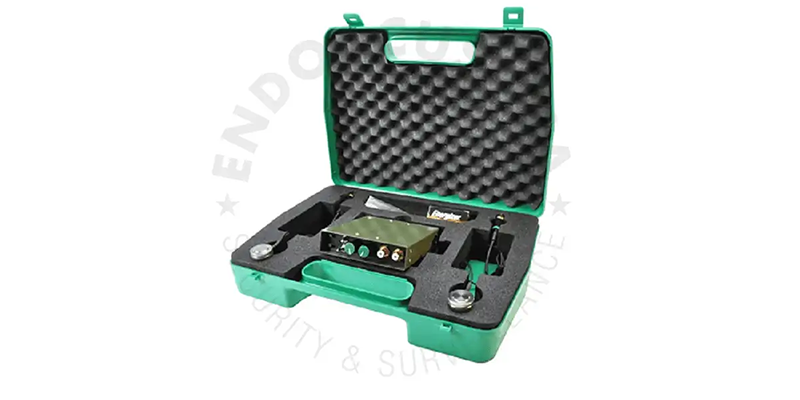
Contact audio monitoring and recording
Professional Wall Microphones & Through-Wall Listening Devices
Compare wall microphones for contact audio monitoring and recording. Endoacustica offers external-probe systems, compact stereo contact microphones, and digital stethoscopes with USB recording. Review the sensors, audio controls, and connections to select the system that fits your requirements.
For through-wall listening, start with the surface and the audio you need to capture. Then compare adjustable gain, filters, stereo channels, and battery options. Recording methods range from direct USB storage to outputs for an external recorder.
For a radio connection, explore the UHF contact transmitter and its receiver requirements. Request pricing and configuration advice with the model, surface details, and recording equipment you plan to use.
Compare wall microphones and contact listening systems
External probes
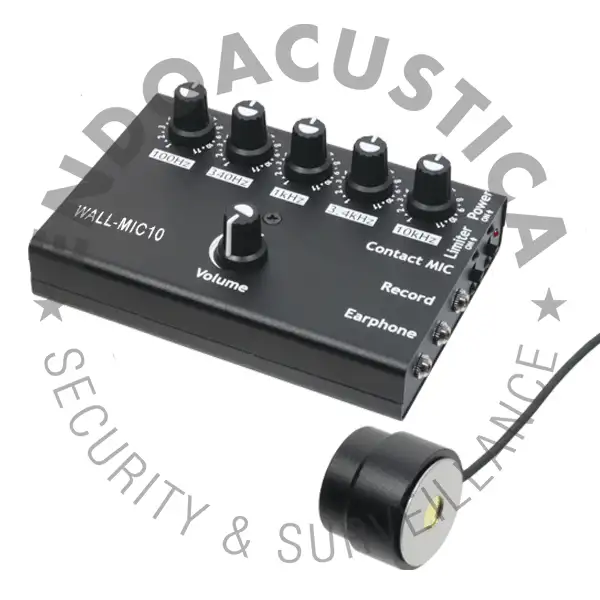
WALL-MIC10
Wall Microphone with 5-Band Equalizer
A screw-type probe with a 1 m cable, five-band EQ, and a 3.5 mm audio output. Runs on six AA batteries for up to 75 hours under ideal conditions. Actual runtime varies with use.

External probes
MM-STE
Stereo Wall Microphone with External Sensors
Two piezoceramic sensors, 60 dB dynamic range, and stereo balance adjustment. Powered by four AA batteries or an external 9–12 V supply.

External probes
ENSTV-2
Stereo Contact Microphone Amplifier
Includes two KB11 probes, adjustable gain from 0 to 60 dB, and independent channel controls. Supports headphone monitoring and an external recorder connection.

External probes
MMS-M66
Wall Microphone with Needle and Contact Probes
Interchangeable needle and ceramic contact probes, amplification up to 2,000×, and an internal rechargeable lithium battery. Up to 100 hours under ideal conditions; actual runtime varies.

USB recording
ENGT-18
Digital Stereo Stethoscope with USB Recording
Two channels, DSP, and five-band EQ. Records uncompressed audio to USB storage, with a 50 Hz–8 kHz frequency response. Restricted sale.

UHF transmission
UHF-STE
UHF Contact Microphone Transmitter
416.5–423.5 MHz WFM transmission at 5–7 mW. Designed for glass and windows; wall use requires an optional component. A compatible receiver is required.

Integrated sensors
MMS-ST
Compact Stereo Contact Microphone
Integrated probes and amplifier with two 3.5 mm stereo outputs for simultaneous monitoring and external recording. Runs on a 9 V battery with at least 50 hours of guaranteed operation.
No matching equipment. Try another term or clear the filters.
Choosing a Professional Through-Wall Listening System
Compare the sensor, audio controls, and recording path before selecting a contact listening system.
Choose by surface, audio controls, and recording needs
A professional wall microphone is a complete listening system: contact sensors, amplification, and an audio output. Compare probe design and channel controls first, then decide whether you need headphone monitoring, direct USB recording, or a connection to an external recorder. These differences matter more than a general claim of high sensitivity.
How through-wall listening works
A contact sensor picks up vibrations traveling through a solid surface and converts them into an electrical signal. The amplifier makes that signal available for listening, while filters help adjust its frequency balance. Unlike a room microphone that captures airborne sound, a through-wall listening device depends on the acoustic signal reaching the contact sensor through the structure.
Concrete, brick, and other wall materials
Wall construction affects how much usable sound reaches the sensor. Thickness, insulation, cavities, and background noise all influence the result. There is no single wall-thickness rating for the entire range. When evaluating a wall microphone for concrete or brick, provide the construction details along with your monitoring requirements.
External probes or an integrated contact microphone
The MM-STE stereo stethoscope uses two external piezoceramic sensors. The MMS-ST stereo contact microphone combines its sensors and amplifier in one housing for a compact setup. For interchangeable probe types, the MMS-M66 includes a needle probe and a ceramic contact capsule. Review the probe design and connections in each product specification.
Gain control, filters, and stereo channels
The WALL-MIC10 provides five-band equalization. The ENSTV-2 stereo amplifier offers 0–60 dB adjustable gain and independent channel controls. Gain raises the level of the captured signal, including its noise; filters let you adjust selected frequencies. Compare the controls available on each model rather than choosing by amplification alone.
Wall microphones with recording capability
For a wall listening device with recording, check where the audio is stored. The ENGT-18 digital stereo stethoscope records uncompressed audio to USB storage and includes DSP and five-band EQ. MMS-ST uses separate stereo outputs for headphones and an external recorder. Other models provide different recording connections, so confirm the outputs and required equipment before ordering.
Wireless contact microphones and UHF receivers
The UHF-STE contact transmitter sends captured audio over a WFM radio link to a compatible receiver. Its contact transducer is designed for glass and windows; wall applications require an optional component. Match the receiver to the transmitter frequency and modulation. A wireless audio link does not replace the sensor’s physical contact with the surface.
Professional monitoring applications
Contact listening equipment supports authorized investigative audio monitoring and the examination of structure-borne sound. Probe design, channel controls, and recording options determine which system fits the task. Specialized acoustic inspection, search-and-rescue, and technical examination require equipment selected for those conditions; the models in this catalog have different capabilities and configurations.
Request pricing for a complete system
Specify the surface, the model you are considering, and whether you need live monitoring, recording, or a radio link. Request pricing and configuration advice for the probes, power options, and accessories required. For extended battery use, compare model-specific specifications: MMS-ST provides at least 50 hours of guaranteed operation, while maximum runtime figures for other units describe ideal conditions.
Wall Microphone FAQs
What is the difference between a wall microphone and a regular microphone?
A wall microphone uses a contact sensor to capture vibrations in a solid surface. A regular room microphone captures airborne sound. Contact sensors, amplification, and filters form the listening system used for through-wall audio monitoring.
Do wall listening devices work through concrete or brick?
They can detect sound transmitted through solid structures, but performance depends on construction, thickness, insulation, and background noise. Concrete or brick alone does not establish the expected audio clarity. Share the wall details when requesting a recommendation.
How thick a wall can a contact microphone work through?
There is no universal thickness limit across this range. A multilayer or insulated wall may transmit sound differently from a solid wall. Evaluate the selected model against the actual structure instead of relying on a general thickness claim.
Can I listen and record at the same time?
Yes, with a model that supports the required outputs or recording function. MMS-ST has two 3.5 mm stereo outputs for headphones and an external recorder. ENGT-18 records uncompressed audio to USB storage. Check the selected model’s connections and recording equipment requirements.
Does a wall microphone include a built-in recorder?
Recording capability varies by model. ENGT-18 manages recording to USB storage. Models with an audio output for a recorder require a separate compatible recorder; an output jack alone does not mean internal recording is included.
What do adjustable gain and audio filters do?
Gain controls the level of the captured signal. Filters and equalizers adjust selected frequencies to help manage the sound available for listening. They cannot recover audio that the sensor does not detect.
Is there a wireless through-wall listening option?
UHF-STE transmits contact audio to a compatible WFM receiver. Its standard transducer is intended for glass and windows, with an optional component required for wall use. The sensor must still contact the surface, and the receiver must match the radio configuration.
How do I compare professional wall microphone prices?
Compare the complete system: probe type, channels, audio controls, recording method, power supply, and included accessories. Send the model and intended requirements to request a quote for the configuration you need.
Discuss your listening and recording requirements
Send the surface details and the model you are considering. We can review probes, monitoring outputs, and recording options and provide a quote for the equipment you need.
Or call +39 080 302 6530