
Endoacustica offers, Exclusive Customer Service and free Training
 IT

A guide to discreet audio monitoring
Covert Listening Devices
Covert listening devices, often called audio bugs, are small devices that pick up conversations and transmit the sound to a remote listener. Their compact size makes them suitable for discreet monitoring in investigative and security work. Some include recording, while others transmit audio only.
This guide explains how the main technologies work and what to look for in a device’s size, power supply, and receiving system. To compare available models, visit our professional spy listening devices category.
How Covert Listening Devices Work
A microphone converts sound into an electrical signal. The device then sends the audio over a cellular network, an Internet connection, or a direct radio link. The transmission method determines how you listen and which connections or receiving equipment you need.
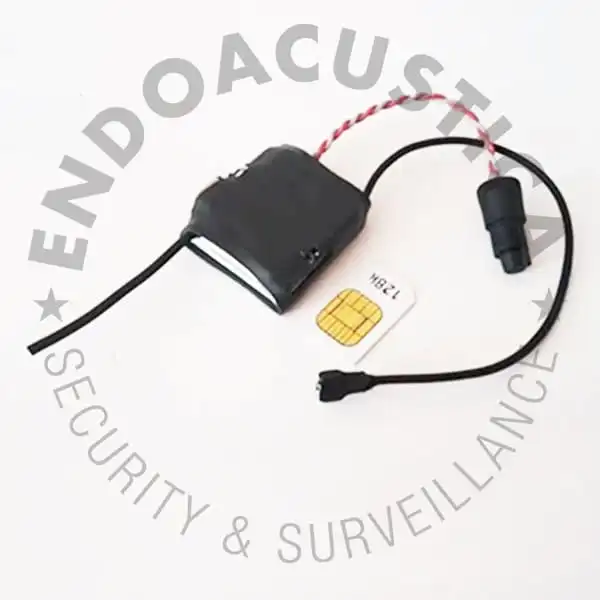
GSM Listening Devices
A SIM card connects the device to a cellular network. Audio is sent over a phone call, allowing the listener to be far from the transmitter. Compatible network coverage is required.
View devices
Wi-Fi Listening Devices
A Wi-Fi device uses an Internet connection to stream audio to an app. PICO2 also records locally and lets users download saved audio remotely.
View devices
Analog Radio Bugs
A radio transmitter sends audio directly to a dedicated receiver. Neither a SIM card nor Internet access is required. The receiver must stay within the transmitter’s operating range.
View devices
Encrypted Digital Systems
These systems encrypt the audio before transmission. A compatible receiver decrypts it for listening, protecting the content from unauthorized reception.
View devicesSize, Battery Life, and Power
Look at the Complete Device
A transmitter’s dimensions may exclude its battery, antenna, or external microphone. All of these affect the space the system needs. A compact housing and a separate microphone offer different installation options, so compare the full assembly rather than the circuit board alone.
Microphone placement also affects clarity. A smaller device does not automatically capture clearer speech: distance from the speaker, surrounding materials, and background noise all matter.
Match the Power Supply to the Operating Time
Battery power supports portable use without an electrical outlet. Runtime depends on battery capacity and how much time the device spends listening, transmitting, or recording. Maximum runtime figures describe ideal conditions; actual runtime varies with use.
For a fixed location, a device designed for external power can operate without regular battery changes. Check its specified voltage and power supply. Continuous operation on external power is different from battery runtime.
Live Audio, Recording, and Voice Activation
Listening Now or Playing Back Later
Live listening lets you hear conversations while they take place. Recording saves the audio for later review. These functions may be combined, but they are not interchangeable.
For example, PICO2 offers live listening and recording with remote file access. A standalone voice recorder is a different option when you need to save conversations without monitoring them live.
What Voice Activation Actually Does
Voice activation (VOX)A sound-triggered function that can activate transmission, start recording, or place a call, depending on the device. responds when sound reaches the device’s activation threshold. The resulting action depends on the model: it may start transmitting, begin recording, or call a preset phone number.
Look at the specific function, not just the VOX label. A sound-triggered call alerts the listener; sound-triggered recording saves audio for later playback.
Understanding Range and Encryption
Microphone Pickup and Transmission Range
Microphone pickup describes the sound the device can capture at its location. Speech clarity depends on distance, room acoustics, and noise. Transmission range describes how far a radio signal can travel to its receiver.
GSM and Internet-connected devices allow remote access through their respective networks. That does not extend the microphone’s ability to pick up distant speech. For radio systems, use the stated range together with its test conditions when comparing models.
Digital Does Not Always Mean Encrypted
A digital transmitter converts audio into digital data. An encrypted transmitter adds protection to that data before sending it. A compatible receiving system then decrypts the audio.
When confidentiality is a requirement, compare the encryption specifications and receiver capabilities of the encrypted listening systems. Digital transmission alone is not proof of encryption.
Choosing a System for Professional Use
For investigative work, the practical questions are how the audio will reach the listener, how long the system must run, and whether recordings are needed afterward. A portable radio system provides a direct connection to a receiver. Wi-Fi and cellular devices provide remote access through a network. Encrypted systems add protection to the transmitted audio.
A useful specification should make these five points clear:
- Overall dimensions: including the microphone, antenna, and required battery.
- Audio reception: phone call, app, or dedicated receiver.
- Power: battery capacity, runtime conditions, and external power options.
- Recording: where audio is saved and how it is retrieved.
- Included equipment: transmitter, receiver, power supply, and accessories.
Endoacustica provides support with equipment selection, configuration, and installation. The listening device catalog brings together the available models and links to their individual specifications.
Frequently Asked Questions
What are covert listening devices?
Covert listening devices are compact microphones and transmitters used to monitor audio discreetly. They pick up conversations and send the sound to a phone, app, or dedicated receiver. Some models also record audio for later playback.
What does a listening device look like?
There is no single design. A device may be a small enclosed transmitter, an electronic module with a separate microphone, or a system integrated into another object. Batteries and antennas can add to its overall size. Appearance alone does not establish what a device does.
Can a listening device work without Wi-Fi?
Yes. GSM devices use cellular service, while radio bugs transmit directly to a receiver. A standalone voice recorder also works without Wi-Fi, but stores audio for later playback rather than transmitting it live.
Does a long transmission range mean the microphone can hear farther away?
No. Transmission range is the distance between a radio transmitter and its receiver. Microphone pickup depends on the distance to the speaker, voice level, room acoustics, and background noise. A cellular or Internet connection extends remote access, not microphone pickup.
Do all covert listening devices record audio?
No. Some transmit audio only; others include recording. A receiving system may also offer a way to save the audio. Check whether recording takes place in the device or at the receiver, and how the files are retrieved.
What does voice activation do?
Voice activation responds to sound. Depending on the device, it can start recording, switch on transmission, or call a preset phone number. It is sound-triggered operation, not identification of a particular speaker.
Are digital audio bugs always encrypted?
No. Digital transmission and encryption are separate features. An encrypted system protects the audio content and requires a compatible receiver to decode it. Look for explicit encryption specifications rather than relying on the word “digital.”
Compare Professional Listening Devices
Browse Wi-Fi, GSM, radio, and encrypted systems, with specifications and receiving options for each model.
Equipment is intended for lawful use. Any supply restrictions are listed on the individual product pages.