
Endoacustica offers, Exclusive Customer Service and free Training
 IT

Discreet listening and recording
Spy Bugs: Audio Transmitters, Recorders and Key Differences
Spy bugs are small electronic devices used to capture conversations discreetly. An audio bug typically transmits sound to a phone, app or dedicated receiver. A hidden recorder stores conversations for later playback, while some devices combine both functions.
The distinction matters when choosing equipment: listening to a conversation as it happens requires an audio connection; reviewing it afterward requires a recording. This guide explains the differences and links to relevant examples. For the full product range, browse our professional spy listening devices.
Listening Bugs and Recording Bugs: What Is the Difference?
Audio transmitters for live listening
A listening bug picks up sound through a microphone and sends it to a receiving device. You hear the conversation while it takes place. Depending on the model, the audio reaches you through a cellular call, an Internet connection or a direct radio link.
This is useful when you need to follow a conversation as it unfolds. Saving that conversation is a separate function: it may be handled by the transmitter, the receiving equipment or an additional recorder.
Hidden recorders for later playback
A recording bug saves the microphone’s audio to internal memory or a memory card. It can capture a conversation without someone listening at the time.
Recordings may be retrieved through a cable, removable storage or a wireless connection, depending on the model. Our hidden voice recorder category covers devices designed primarily for recording, including compact modules and recorders built into everyday objects.
Devices That Combine Live Audio and Recording
A combined device lets you listen when needed and review saved audio afterward. PICO2, for example, streams live audio through an app, records to microSD and supports remote file downloads. Local recording works even when Internet access is unavailable.
When comparing these devices, check where the audio is saved and how you retrieve it. Recording on the device preserves audio locally; recording at the receiving end depends on the audio reaching that receiver.
Three Examples of Professional Audio Bugs
These examples show how the listening method changes from one device to another.
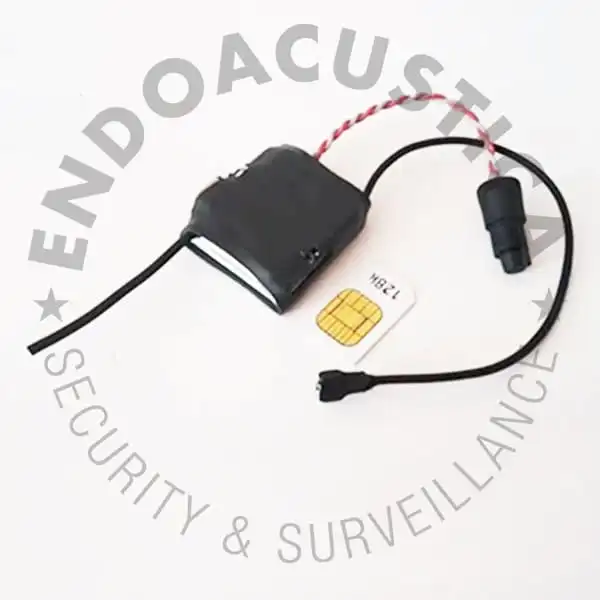
GSM phone calls
NANO-BUG
A compact GSM listening device with an internal rechargeable battery. Audio is heard through a phone call, with SMS configuration and sound or motion triggers for automatic callbacks.
View NANO-BUG specifications ↗
Live audio and recording
PICO2
A Wi-Fi listening device with an Android and iOS app. It combines live streaming, microSD recording and remote downloads, allowing both immediate listening and later review.
View PICO2 specifications ↗
Direct radio transmission
SPUTNIK
A miniature UHF transmitter with an external microphone. It sends live audio to a compatible radio receiver without a SIM card or Internet connection.
View SPUTNIK specifications ↗For a fuller explanation of cellular, Wi-Fi, analog radio and encrypted transmission, see our covert listening device guide.
What Voice Activation Does
Voice activation (VOX)A sound-triggered function that activates when the microphone detects audio above a selected threshold. lets a device respond when it detects sound. NANO-BUG can call a preset number, alerting you to listen. PICO2 can start recording, saving audio for later review.
A callback and a recording serve different purposes. The first brings an event to your attention; the second creates an audio file. VOX responds to sound, rather than recognizing who is speaking.
Spy Bugs, Hidden Cameras, GPS Trackers and Spyware
These terms are sometimes grouped together, but they describe different functions. An audio bug captures sound. A hidden camera captures images and may also include a microphone. A GPS tracker reports location; audio is available only on models with a microphone and listening or recording capability.
Spyware is software installed on a computer or phone. It is not another name for a physical audio transmitter. Separating these functions makes it easier to find the right equipment without assuming that a device records video, tracks location or accesses a phone simply because it is described as a “spy bug.”
Size, Power and Audio Access
A small housing supports discreet use, but the complete assembly may also include a battery, antenna and separate microphone. The small audio bug comparison explains those differences using actual device dimensions.
Battery runtime and recording capacity are separate specifications. Battery capacity and operating mode determine how long the device can run; memory and audio settings determine how much it can store. Compare continuous operation with continuous operation, rather than with standby figures.
For live listening, identify the receiving equipment first: a phone call, an app or a dedicated receiver. For recording, establish where the files are saved and whether retrieval requires physical access or supports remote downloads.
Looking for a Bug Detector Instead?
An audio bug captures sound; a bug detector is used to search for surveillance equipment. If your goal is to find a suspected device, visit our bug detection equipment category. Detection equipment should be selected for the type of device being investigated, rather than assuming one detector can identify every transmitter and recorder.
Frequently Asked Questions About Spy Bugs
What is a spy bug?
A spy bug is a small electronic device used to pick up conversations discreetly. The term usually refers to an audio transmitter, but it is also used for hidden recorders and devices that combine live listening with recording.
What is the difference between a listening bug and a recording bug?
A listening bug sends audio to a listener while a conversation takes place. A recording bug saves audio for later playback. Some devices provide both functions, but a transmitter does not necessarily include memory or recording.
Can I listen to a spy bug through my phone?
Yes, with a suitable model. NANO-BUG delivers audio through a GSM call, while PICO2 provides live listening through an Android or iOS app. A radio transmitter such as SPUTNIK needs a compatible receiver instead.
Do spy bugs need an Internet connection?
Not all of them. A GSM voice device uses cellular calls, and a radio bug sends audio directly to a receiver. PICO2 needs Internet access for remote listening and downloads, but can continue recording locally without it.
Does voice activation recognize a particular person?
No. Voice activation responds to sound above a selected threshold. On NANO-BUG it can trigger a callback; on PICO2 it can start recording. Identifying a particular speaker requires a separate voice-analysis capability.
Is a spy bug the same as spyware?
No. An audio bug is a physical device with a microphone. Spyware is software that runs on a computer or phone. The terms describe different technologies and should not be used interchangeably.
Does a GPS tracker also let me listen to conversations?
Only if it includes an audio function. GPS determines location; it does not capture sound. A tracker needs a microphone and the appropriate audio features to support listening or recording.
Can a spy bug be detected?
Detection depends on the device and the equipment used to search for it. An RF detector looks for radio transmissions, so it cannot by itself identify every recorder or inactive device. Professional inspection may require several methods.
Explore Professional Listening Devices
Compare available models, audio connections and recording features, or ask our team for help choosing a system.