
Endoacustica offers, Exclusive Customer Service and free Training
 IT

Discreet, real-time audio monitoring
Professional Spy Listening Devices
Spy listening devices pick up conversations and transmit the audio so you can listen from another location. Built for discreet audio surveillance, these miniature devices combine sensitive microphones with compact transmitters. Endoacustica offers professional Wi-Fi, GSM, UHF radio, and encrypted listening systems for investigative and security work.
Wi-Fi models let you listen over the Internet through an app, while GSM devices use the cellular network. Radio bugs send audio directly to a dedicated receiver, and encrypted systems protect the transmission from unauthorized listening. The range also includes devices for monitoring landline calls. Selected models combine live listening with recording and remote file downloads.
Browse Listening Devices by Technology
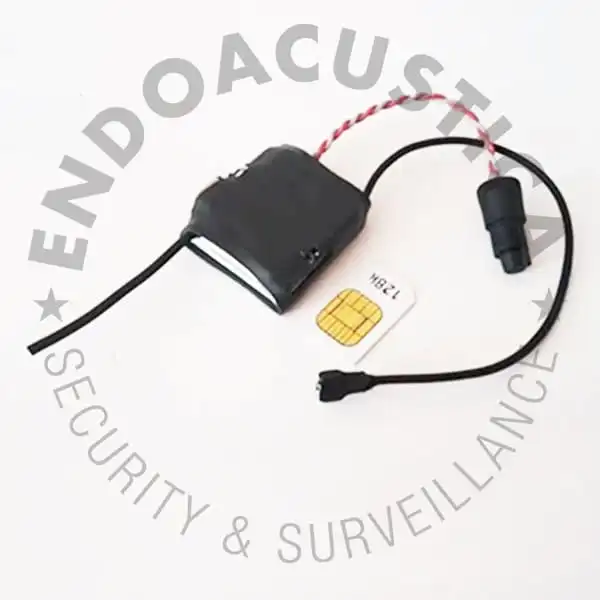
GSM Listening Devices
Listen remotely over the cellular network, without a local Wi-Fi connection.
Explore devices
Analog Radio Bugs
Direct audio transmission to a dedicated receiver. No SIM card or Internet connection needed.
Explore devices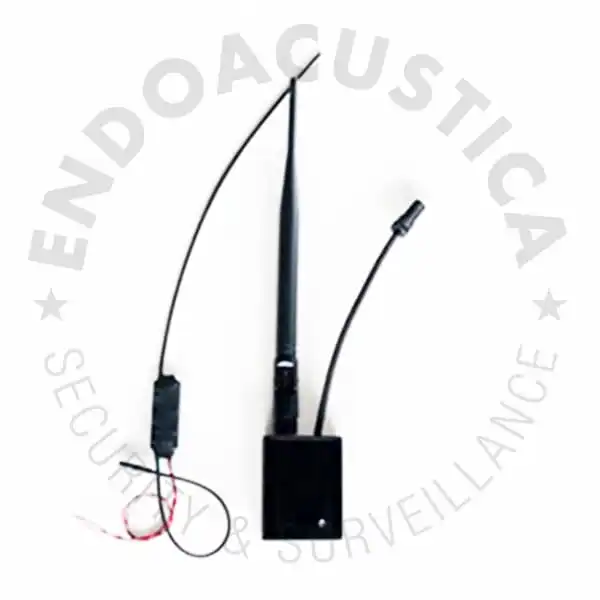
Encrypted Listening Systems
Protect transmitted audio with encryption and listen through a compatible receiver.
Explore devices
Landline Listening Devices
Dedicated devices for monitoring conversations carried over a telephone line.
Explore devicesFor live listening through an app, see the PICO2 Wi-Fi listening device.
Featured Spy Listening Devices
Top Product

PICO2
Wi-Fi Listening Device with Remote Recording Access
PICO2 lets you listen live and download recordings through an Android or iOS app. It connects to 2.4 GHz Wi-Fi and records continuously or when sound is detected. Supports microSD cards up to 128 GB and continues recording locally without an Internet connection.
NANO-BUG
Programmable GSM Audio Bug
A compact listening device with voice activation, a motion sensor, and remote configuration by SMS. NANO-BUG uses a SIM card to transmit audio over the cellular network. Its separate microphone allows more flexibility when fitting the device into a small space.

GSM-BUG
GSM Audio Bug with Voice-Activated Call-Back
GSM-BUG calls a preset phone number when it detects sound, allowing you to answer and listen. A SIM card connects the device to the cellular network, so you can monitor audio without remaining near the transmitter.
Best Seller

UHF-220B
220 V AC-Powered UHF Audio Bug
A miniature transmitter for continuous listening on 220 V AC power. UHF-220B sends audio directly to a compatible radio receiver. It requires neither a SIM card nor an Internet connection, and external power removes the need for battery changes.
Top Product
SPUTNIK
SPUTNIK Miniature UHF Audio Bug
A miniature UHF transmitter with quartz frequency stabilization and automatic gain control. SPUTNIK transmits to a compatible receiver over distances of up to 700 meters in open-field conditions. Operates independently of Wi-Fi and cellular networks.
ENDIGIT-128
Encrypted Digital Transmitter and Receiver
ENDIGIT-128 includes a digital audio transmitter and dedicated receiver, with encrypted transmission and RF output power of up to 1 watt. Designed for professional monitoring where the transmitted audio needs to be protected from unauthorized listening.

ENRMI-400
Encrypted Digital Audio Bug System
ENRMI-400 sends audio using encrypted digital packets. A compatible receiving system receives the transmission and decodes the audio for listening. Designed for professional surveillance applications requiring encrypted transmission.
ENKPL-TD
Digital Telephone-Line Audio Transmitter
ENKPL-TD transmits landline telephone conversations to a compatible receiver. It connects through a telephone-line interface and uses digital ADM encoding to transmit the captured call audio.
How to Choose a Spy Listening Device
Listening by Phone, App, or Radio Receiver
A GSM listening device uses cellular networks to transmit audio remotely, allowing users to listen from virtually anywhere with network coverage. A Wi-Fi listening device such as PICO2 streams audio over the Internet, providing remote access through a dedicated app. Analog radio bugs, on the other hand, transmit audio directly to a dedicated receiver within radio range, without requiring a SIM card or Internet connection.
Compact Size for Discreet Installation
When space is limited, account for the transmitter, battery, microphone, and antenna, not just the transmitter housing. The device’s shape and dimensions determine where it will fit, while microphone placement affects how clearly it picks up conversations.
Battery Life and Continuous Power
A battery-powered listening device works without an electrical outlet. For extended monitoring in a fixed location, external power avoids the need to recharge or replace batteries. UHF-220B is designed to run from a 220 V AC supply. For battery-powered models, operating time depends on battery capacity and how the device is used.
Live Listening, Recording, and Voice Activation
Live listening lets you hear conversations as they happen. Recording saves the audio for later playback. PICO2 offers both functions and lets you download recordings remotely. For devices designed primarily to save audio, see our hidden voice recorders.
Voice activation (VOX)Sound-triggered operation. The device may start transmitting, begin recording, or call a preset phone number when sound is detected. responds when the device detects sound. Depending on the model, it starts a transmission, places a call, or begins recording. For example, GSM-BUG supports automatic call-back, while PICO2 offers voice-activated recording.
Protecting the Audio Transmission
Encrypted digital listening systems encrypt audio before transmitting it. A compatible receiver decrypts it for listening. Compare the encryption method, transmission range, and receiver features when choosing a system. Digital transmission alone does not mean the audio is encrypted.
Listening Device Comparison
| Device type | How you listen | Connection |
|---|---|---|
| Wi-Fi · PICO2 | App with live audio and access to recordings | Wi-Fi with Internet access |
| Cellular / GSM | Remote audio over the mobile network | SIM card and compatible cellular service |
| Analog radio | Dedicated radio receiver | Direct transmitter-to-receiver link |
| Encrypted digital | Compatible receiving system | Encrypted audio link |
| Landline | Telephone-line audio through the receiving system | Compatible telephone-line interface |
Frequently Asked Questions
Can I listen on my phone?
Yes. PICO2 lets you listen through an Android or iOS app. GSM devices let you listen over a phone call. Radio bugs require a compatible radio receiver.
Do listening devices need Wi-Fi or a SIM card?
Wi-Fi models need a wireless network with Internet access for remote listening. Cellular models need a SIM card and compatible mobile service. Radio transmitters communicate directly with a receiver and need neither Wi-Fi nor a SIM card.
What is the difference between a listening device and a voice recorder?
A listening device transmits audio for live monitoring. A voice recorder saves it for later playback. Some devices do both. If you need to record conversations and listen afterward, browse our hidden voice recorders.
Can I listen from another city?
Yes. GSM devices use the cellular network, and Wi-Fi models such as PICO2 use the Internet. With those connections available, you do not need to stay near the device. Radio bugs transmit directly to a receiver, so the receiver must remain within radio range.
How long can a listening device operate?
Battery runtime depends on the model, battery capacity, and listening or recording mode. Stated maximum runtimes are best-condition estimates; actual runtime varies with use. Devices designed for external power can operate continuously while that supply is available.
Is a receiver included?
ENDIGIT-128 includes both a transmitter and a receiver. Other radio transmitters may be sold separately; each product page lists what is included. Wi-Fi and GSM devices use an app or phone connection instead of a radio receiver.
Are all digital listening devices encrypted?
No. Digital audio is not necessarily encrypted. Encryption adds protection so the transmitted audio can be decoded by the authorized receiving system. See our encrypted listening systems for available models.
Help Choosing a Listening Device
Our team can help you compare models, select a compatible receiver, and choose a power supply for the operating time you need.
Equipment is intended for lawful use. Any supply restrictions are listed on the individual product pages.