
Endoacustica offers, Exclusive Customer Service and free Training
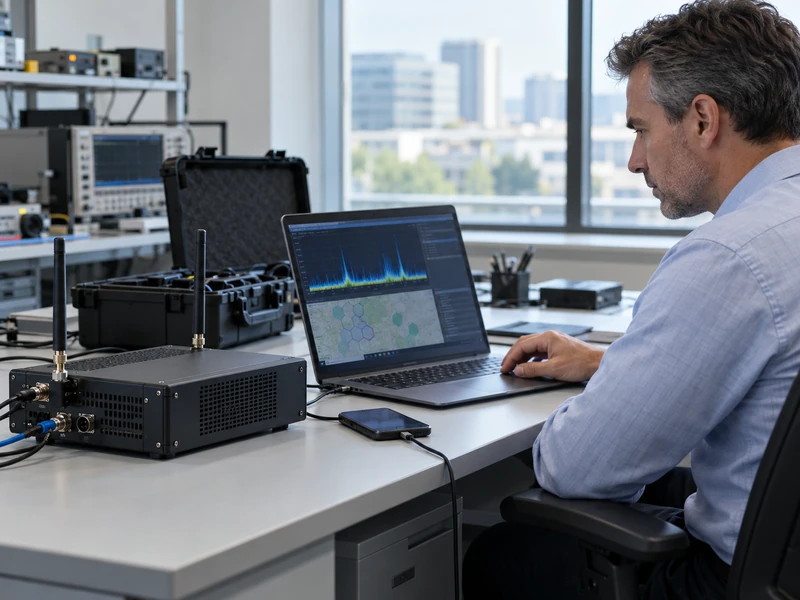
Cellular identification and monitoring
IMSI Catchers & Cellular Interception Systems
Endoacustica supplies IMSI catchers, cellular interception systems, and mobile forensic equipment for government and law enforcement. The range covers subscriber and handset identification, GSM communication monitoring, and extraction of records stored on phones and tablets.
Portable IMSI catchers collect cellular identifiers, with separate modules available for handset location and network analysis. Active and passive GSM systems handle supported radio communications. Mobile forensic tools examine device memory to recover and analyze records such as messages, call logs, media files, and saved locations.
The current MULTI-CATCHER configuration supports GSM, UMTS, LTE, and 5G NSA identification. Voice and SMS interception modules are not included. The HYBRID platform provides GSM communication functions through a separate module, while ULTIMATE INTERCEPTOR uses a 64-channel passive GSM receiver.
IMSI Catchers, GSM Systems & Mobile Forensic Tools
IMSI catchers
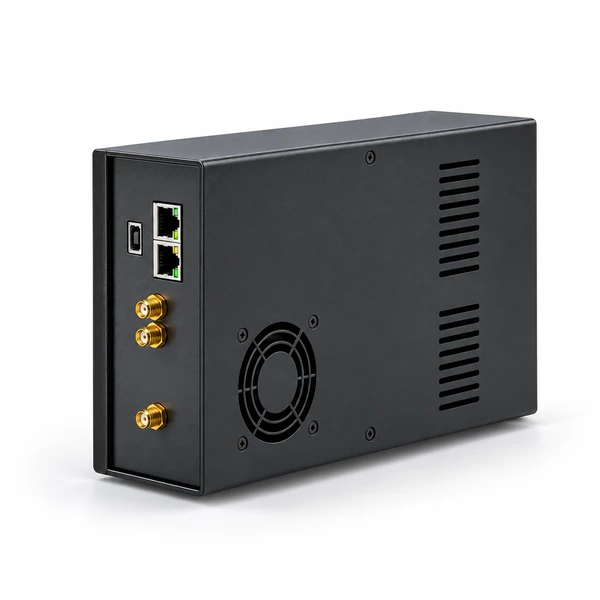
MULTI-CATCHER
Portable IMSI Catcher for GSM, LTE & 5G NSA
IMSI and IMEI identification on GSM, UMTS, LTE, and 5G NSA. Two-carrier SDR unit weighing 1.4 kg (3.1 lb), with LAN control. Optional direction finder and network analyzer. Voice and SMS modules are not included.

Active systems
HYBRID ACTIVE INTERCEPTOR
Active Cellular Interception System
Separate GSM and Multi-RAT modules. Eight duplex GSM channels, plus identification on GSM, UMTS, LTE, and 5G NSA. Laptop control station with an SQL database, recording playback, and data export.

Passive GSM receivers
ULTIMATE INTERCEPTOR
64-Channel Passive GSM Receiver
64-channel GSM receiver covering 850, 900, 1800, and 1900 MHz. Separate uplink and downlink antennas with laptop control. Portable and rack-mounted versions. Powered by 220 V AC or 12 V DC.

Mobile forensics
CELL-ANALYZER
Mobile Forensic Data Extraction System
Standalone touchscreen system for physical and logical extraction, hexadecimal analysis, and data recovery from compatible devices. Exports HTML, XLS, CSV, and XML reports. Includes cables and adapters.
No matching systems. Try another search term or clear the filters.
IMSI Catchers and Cellular Interception Explained
Cellular identifiers, radio communications, and device data
An IMSI identifies a mobile subscription. A voice recording contains communication content. A recovered message comes from a device’s stored data. These are different sources of information, and each requires a system with the corresponding capability. The sections below explain how IMSI catchers, active and passive cellular systems, and mobile forensic tools fit into this category.
What is an IMSI catcher?
An IMSI catcher is radio equipment used to collect mobile subscriber identifiers. Active systems perform this function through cellular base-station signaling. In U.S. law enforcement, related equipment is commonly described as a cell-site simulator.
The MULTI-CATCHER IMSI/IMEI system combines a software-defined radio unit with a laptop control station. Its base configuration identifies subscriptions and handsets on supported cellular technologies. Direction finding and network analysis are available through separate modules. This package does not include voice or SMS interception modules.
IMSI, IMEI, and TMSI: what each identifier means
IMSI stands for International Mobile Subscriber Identity. It identifies a cellular subscription associated with a SIM. IMEI, or International Mobile Equipment Identity, identifies the mobile device. A subscription and a handset therefore have different identifiers.
TMSI is a temporary subscriber identity assigned by the network. It can change over time. None of these terms is interchangeable with a phone number, and collecting an identifier does not automatically reveal the subscriber’s number or the contents of the phone.
Active cellular interception and passive GSM reception
Active systems transmit cellular signals and interact with mobile devices. Passive receivers listen to existing radio traffic. The distinction describes how the radio hardware operates; supported communications depend on the specific modules and cellular standards.
HYBRID ACTIVE INTERCEPTOR has a dedicated GSM module for voice and SMS functions and a separate Multi-RAT module for cellular identification. Its eight duplex channels belong to the GSM subsystem.
ULTIMATE INTERCEPTOR is a passive GSM platform with a 64-channel receiver, separate uplink and downlink antennas, and a laptop workstation. Its main receiver covers GSM 850, 900, 1800, and 1900 MHz. An optional network analyzer is a separate instrument with its own capabilities.
4G and 5G IMSI catchers: supported technologies and functions
In this range, 4G LTE and 5G NSA support applies to cellular identification. MULTI-CATCHER supports GSM, UMTS, LTE, and 5G Non-Standalone. The HYBRID platform’s Multi-RAT identification module covers the same generations, while its voice and SMS functions operate through the GSM module.
5G NSA uses LTE infrastructure alongside 5G radio technology. 5G Standalone uses a different network architecture and is not included in the MULTI-CATCHER configuration offered here. A 5G identification capability does not establish support for 5G voice interception.
Handset location and cellular network analysis
The optional GSM/UMTS/LTE direction finder adds handset-location capability to MULTI-CATCHER. It is separate from the SDR unit and from the RF amplifier.
C-SCAN surveys 2G, 3G, and 4G networks and organizes the results in a cell database and map display. Network mapping describes cellular infrastructure; it does not provide a handset’s GPS coordinates. Direction finding, network surveys, and extraction of saved location records are distinct functions.
Mobile forensic data extraction
Mobile device forensics examines records stored on a phone, tablet, or other supported device. Logical extraction retrieves accessible files and records through the operating system. Physical extraction reads device memory and may provide additional material for analysis, including recoverable remnants of deleted files.
CELL-ANALYZER combines extraction, search, hexadecimal analysis, and reporting in a portable touchscreen unit. Examiners can review supported call records, messages, contacts, media, and location data, then export reports in HTML, XLS, CSV, or XML. Device support depends on the model, operating system, and software version.
Saved GPS records and photo geotags document stored locations. Recovering these records is different from tracking a phone in real time. Deleted-data recovery depends on what remains accessible in memory.
Portable hardware, power, and system documentation
The 1.4 kg (3.1 lb) weight listed for MULTI-CATCHER applies to its SDR unit. The complete package also includes the laptop, antennas, power supply, and cables. ULTIMATE INTERCEPTOR is available in portable and rack-mounted versions with different dimensions and weights.
Power requirements also vary by system. MULTI-CATCHER’s SDR unit uses 10–24 V DC. ULTIMATE INTERCEPTOR is specified for 220 V AC at 50 Hz or 12 V DC; direct connection to U.S. 120 V, 60 Hz mains is not specified. Technical manuals and equipment lists identify the hardware, power components, and optional modules supplied with each configuration.
Technical references: U.S. Department of Justice — cell-site simulator terminology; ETSI TS 125 469 — cellular identifiers (PDF); NIST — Guidelines on Mobile Device Forensics.
Frequently Asked Questions
Does an IMSI catcher intercept calls and text messages?
Identifier collection and communication interception are separate functions. The MULTI-CATCHER package collects IMSI and IMEI identifiers but does not include voice or SMS interception modules. HYBRID’s voice and SMS functions belong to its dedicated GSM module.
Does an IMSI or IMEI identify a phone number?
An IMSI identifies a mobile subscription, while an IMEI identifies the handset. Neither is the phone number itself. Collecting either identifier does not automatically provide the subscriber’s phone number.
What is the difference between an active system and a passive GSM receiver?
An active system transmits cellular signaling and interacts with mobile devices. A passive receiver listens to existing radio signals. The supported bands, standards, and communication functions depend on the equipment configuration.
Does MULTI-CATCHER support 5G Standalone?
This configuration supports GSM, UMTS, LTE, and 5G NSA. It does not include 5G Standalone. On the HYBRID platform, 5G NSA support also applies to identification; voice and SMS functions remain within the GSM subsystem.
Is handset location included with MULTI-CATCHER?
The GSM/UMTS/LTE direction finder is an optional module. The RF amplifier and C-SCAN cellular network analyzer are also separate options. The base package includes the SDR unit, laptop control station, antennas, power supply, and cables.
Does a 64-channel GSM receiver mean 64 simultaneous calls?
The 64-channel figure describes ULTIMATE INTERCEPTOR’s receiver configuration. It is not a guarantee of 64 simultaneous conversations. Receiver channel capacity and the number of calls accessible in a particular network environment are different specifications.
Can CELL-ANALYZER recover deleted data from any smartphone?
Support depends on the device model, operating system, and CELL-ANALYZER software version. Deleted messages and files may be recoverable when usable data remains in memory. Overwriting, encryption, and device security can limit what is available for extraction.
Does GSM interception include WhatsApp messages or calls?
GSM voice and SMS support does not provide access to WhatsApp communication content. Examining app records stored on a phone is a separate mobile forensic task, subject to device support and the data available for extraction.
Technical Information and Manuals
Request product specifications, technical manuals, and equipment lists for your agency’s review.