
Endoacustica offers, Exclusive Customer Service and free Training
 IT
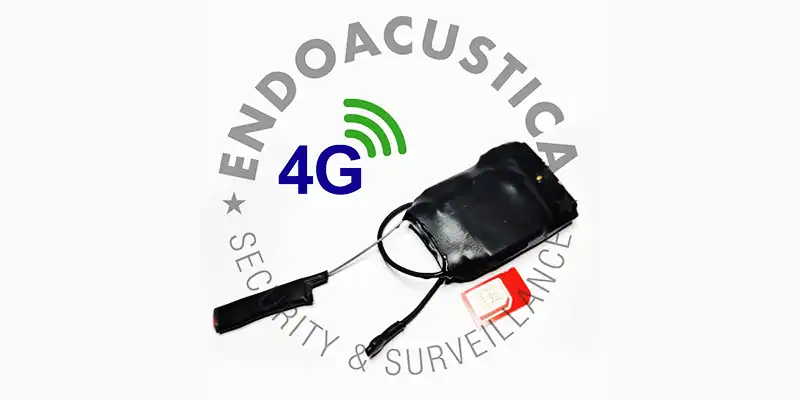
Professional long-distance listening devices
Long-Range Audio Surveillance
Complete Guide to Professional Audio Surveillance Technologies
Modern long-range audio surveillance relies on several professional technologies, including GSM audio bugs, 4G and Wi-Fi listening devices, analog radio transmitters, encrypted digital systems, directional microphones, and fiber optic microphones. Each solution is designed for a specific application and offers different advantages in terms of operating range, audio quality, battery life, security, and installation. Choosing the wrong technology can significantly reduce performance or even make the system unsuitable for your application. In this guide you'll learn how each technology works, its strengths and limitations, and how to choose the professional audio surveillance solution that best fits your needs.
How Long-Range Audio Surveillance Systems Work
“Long-range listening” describes two different tasks: receiving audio from a microphone installed at a remote location, or picking up sound from a distance without placing a microphone near the conversation. The equipment needed for each task is different.
Remote listening through a transmitter
A GSM, 4G, Wi-Fi or radio device captures sound where its microphone is located, then sends the audio to your phone, computer or dedicated receiver. The listener can be far away; the microphone still needs to be within useful acoustic range of the conversation.
Cellular and Internet systems use network connections. Radio transmitters communicate directly with a receiver, without a SIM card or Internet service.
Sound pickup from the listener’s position
Directional and parabolic microphones collect sound traveling toward them from the source. Their useful listening distance depends on voice level, background noise, obstacles and weather.
Laser microphones use a separate optical method: they recover sound from surface vibrations. Their operating requirements include a suitable surface and a clear optical path.
Comparing Long-Distance Listening Technologies
The following models illustrate the main approaches to long-range audio surveillance. Compare the transmission method and power source first, then the microphone, recording options and receiver requirements.
Professional GSM Audio Bugs
GSM audio bugs let you listen by calling the SIM installed in the device. Distance between you and the microphone is not constrained by a direct radio link, provided the device has compatible cellular coverage and the call can connect.

GSM-BUG: GSM listening with GPS
Combines cellular audio monitoring with GPS positioning. Voice activation and motion detection provide alerts when activity is detected. Suitable for remote listening in rooms or vehicles with compatible cellular coverage.
View GSM-BUG specifications ↗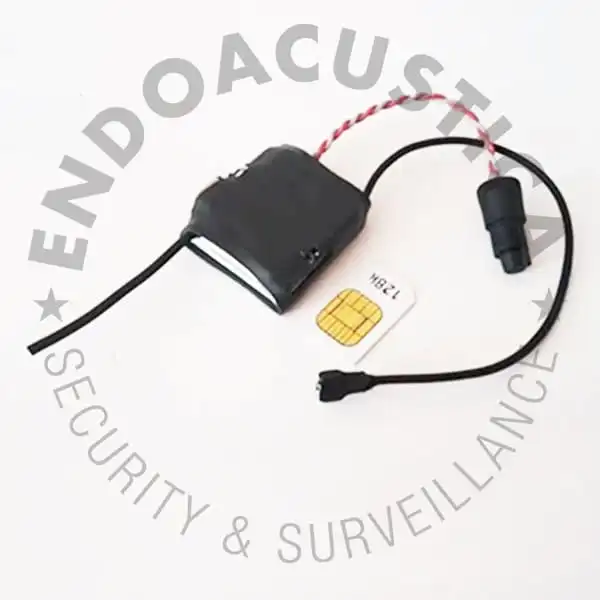
NANO-BUG: Compact GSM audio transmitter
A 31 × 31 × 10 mm quad-band device with SMS configuration, DSP audio processing, voice activation and motion detection. Its compact housing supports discreet installations where space is limited.
View NANO-BUG specifications ↗Browse GSM listening devices for compact models, voice-activated alerts and different power options.
Professional Analog Radio Audio Bugs
Analog UHF transmitters send live audio directly to a receiver. They are useful where cellular or Internet service is unavailable, or when a dedicated local radio link is preferred. The receiver must match the transmitter’s frequency and modulation.

UHF-220B: Continuous-power UHF listening
A 220 V AC transmitter with a Knowles microphone and automatic microphone preamplifier control. An open-field transmission range of over 800 meters supports listening through a compatible receiver. External power eliminates battery changes during operation.
View UHF-220B specifications ↗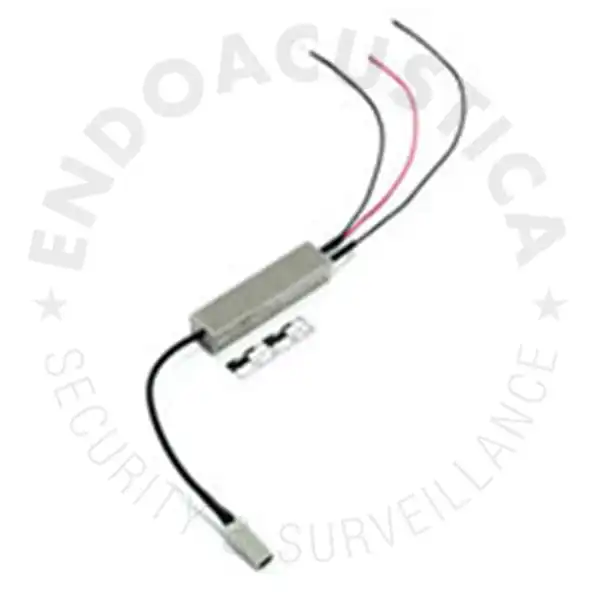
ENRMK-129: Long-range UHF transmission
A 500 mW UHF audio transmitter with a stated range of over one kilometer in open-field conditions. It operates at 416–423 MHz using WFM and requires a compatible receiver. Buildings, antennas and receiver performance affect usable range.
View ENRMK-129 specifications ↗See the analog audio transmitter catalog for available models, or read our guide to radio range and receiver compatibility.
Professional Encrypted Digital Audio Surveillance Systems
Digital systems offer different ways to carry and protect audio. A dedicated encrypted radio kit and a power-line transmitter serve different installations; neither should be selected on a distance figure alone.
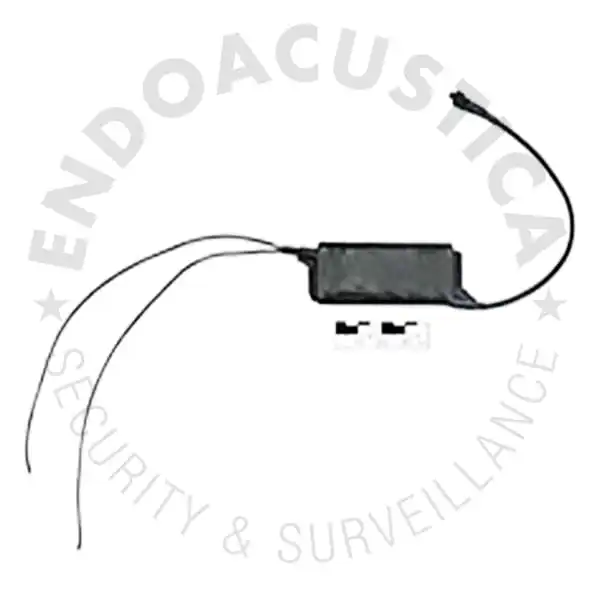
ENKPL-SD: Audio transmission over power lines
Uses existing electrical wiring to carry digitally encoded audio to a compatible receiver. Powered by 220 V AC, it supports fixed installations where a power-line connection is appropriate. It is a different transmission method from a long-range radio link.
View ENKPL-SD specifications ↗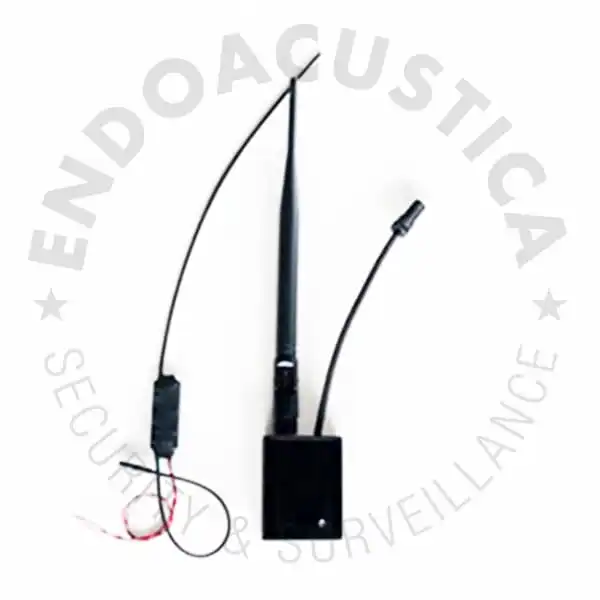
ENDIGIT-128: Encrypted transmitter and receiver kit
Pairs a digital audio transmitter with a dedicated receiver and 128-bit encryption. The system supports 64 kHz / 16-bit audio and battery or external-power operation, combining live listening with protection of the transmitted audio.
View ENDIGIT-128 specifications ↗Compare transmission methods and receiver requirements in our digital and encrypted audio transmitter range.
Professional Directional Microphones
Directional and parabolic microphones support listening from the operator’s position. Optical systems use surface vibrations instead of collecting airborne sound in the same way. These technologies address different acoustic and installation conditions.

LAS-MIC: Optical audio monitoring
Uses a laser beam and optical receiver to recover audio from vibrations on a suitable surface, such as window glass. This specialist approach requires a clear optical path, stable positioning and careful alignment.
View LAS-MIC specifications ↗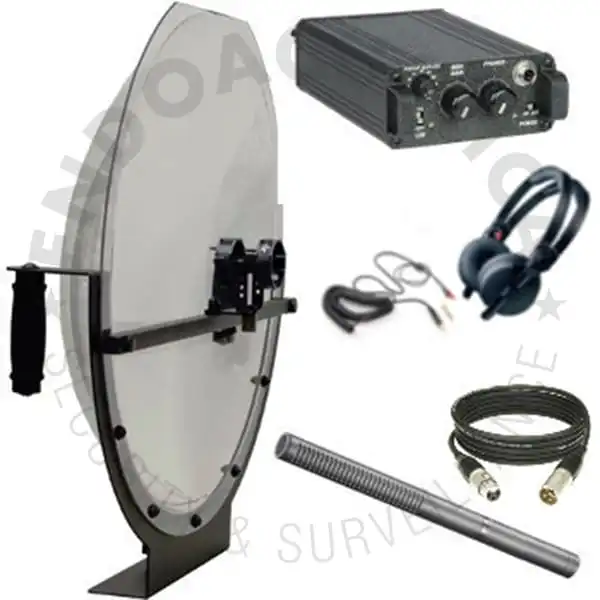
EAGLE: Parabolic listening at a distance
A parabolic reflector concentrates incoming sound on the microphone. EAGLE supports listening at approximately 150–200 meters under favorable acoustic conditions and can be used handheld or on a tripod for investigations, broadcast work and wildlife observation.
View EAGLE specifications ↗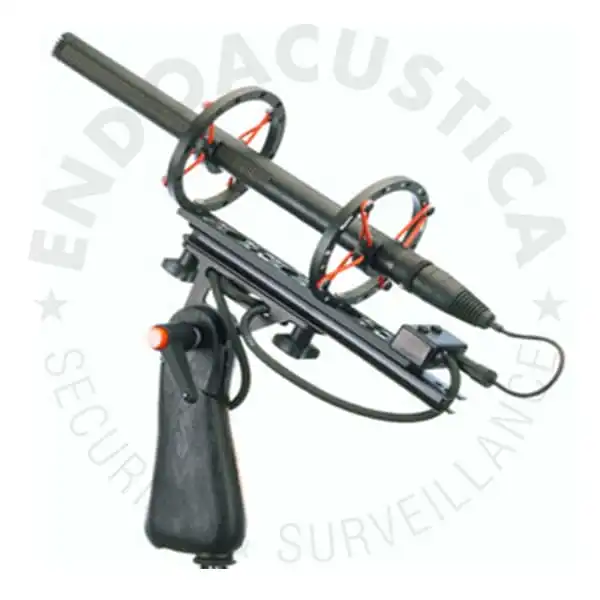
KMR-359: Portable directional microphone
A compact supercardioid microphone with adjustable preamplifier gain and a high-pass filter. Its directional response helps emphasize sound in front of the microphone for mobile listening, field recording and production work.
View KMR-359 specifications ↗Explore the directional microphone range for portable, parabolic and specialist optical systems.
Long-Range Audio Surveillance Technologies: GSM, 4G, Wi-Fi, UHF Radio, and Encrypted Systems
| Technology | How you receive audio | What determines reach |
|---|---|---|
| GSM / 4G | Phone call, data connection or supported app, depending on the model. | Compatible cellular coverage, SIM service and the device’s communication method. |
| Wi-Fi | Remote access through an Internet-connected app or platform. | The device’s local Wi-Fi connection and Internet access; you do not need to remain within its Wi-Fi range. |
| Analog UHF radio | Dedicated receiver within radio range. | Transmitter power, receiver sensitivity, antennas, obstacles and interference. |
| Encrypted digital radio | Compatible receiver that decodes the protected audio. | Radio link performance and correct pairing of transmitter and receiver. |
| Power-line transmission | Receiver connected to a suitable electrical circuit. | The wiring and electrical path between transmitter and receiver. |
| Directional / parabolic microphone | Local headphone or recorder connection. | Sound level, microphone direction, background noise and acoustic path. |
| Laser microphone | Optical receiver and audio processing equipment. | Surface suitability, optical path, alignment and vibration conditions. |
| Fiber optic microphone | Dedicated equipment connected by optical fiber. | The specified fiber link and installation; this is a cabled system. |
For Wi-Fi listening, PICO2 combines live audio through an app with local recording and remote file downloads. Wi-Fi range describes its connection to the router or hotspot, not the distance from which you can use the app.
How to Choose the Right Audio Surveillance System
Start with microphone access and listening distance
If a microphone can be placed at the location, choose how its audio will reach you: cellular, Internet, radio or a dedicated wired system. If audio must be collected from your own position, evaluate directional, parabolic or optical equipment.
For radio systems, check the complete transmitter-and-receiver pairing. A one-kilometer transmission specification does not mean the microphone can hear a conversation one kilometer away.
Match power and recording to the duration
Portable installations need enough battery capacity for the required operating time. Fixed installations may use external power. Check the voltage for the specific model: a 220 V AC device is not automatically suitable for a standard U.S. outlet.
Decide whether you need live listening, stored recordings or both. Compare continuous runtime separately from standby time, and storage capacity separately from battery life.
Choose protection and controls that serve the task
For sensitive audio, check the specified encryption and receiver compatibility. For intermittent activity, voice activation or scheduled recording may reduce unnecessary operation. Confirm which function VOX controls on the chosen model: a call alert, transmission or recording.
Professional Audio Surveillance Systems vs. Low-Cost Devices
Compare documented capabilities rather than the word “professional” on the label. A useful comparison covers microphone performance, transmission stability, power requirements, recording controls and the support available for setup.
| What to compare | What to check before ordering |
|---|---|
| Microphone and processing | Microphone type, gain control, filters and any DSP functions relevant to the intended environment. |
| Transmission | Supported networks or radio bands, receiver requirements and the conditions used for range figures. |
| Power and runtime | Battery configuration, continuous operating time and external-power voltage. |
| Recording and retrieval | Storage, file format, scheduled or voice-activated recording and access to saved files. |
| Setup and support | Configuration assistance, compatible accessories and help with operating the complete system. |
Endoacustica provides consultation, setup assistance and training. This is particularly useful when selecting a compatible receiver or comparing systems that deliver audio through different connections.
Applications of Professional Audio Surveillance Systems
Buildings, offices and meeting rooms
A microphone at the location can deliver live audio over a cellular, Wi-Fi or dedicated radio connection. External power supports longer deployments, while recording captures periods when an operator is not listening. Encrypted systems add protection where audio confidentiality is a priority.
Vehicles and mobile monitoring
Cellular systems can maintain remote access as a vehicle moves through compatible coverage. Compact dimensions, microphone placement and power management matter in confined, noisy interiors. Vehicle-powered installations require a device or interface rated for that supply.
Field investigations
Portable radio systems provide direct listening without local Internet service. Directional and parabolic microphones support sound pickup from the operator’s position. The choice depends on microphone access, acoustic conditions and the distance over which audio must travel.
Warehouses and industrial sites
Machinery and large structures affect both speech pickup and radio propagation. Microphone location, filtering and receiver placement deserve attention alongside power availability. A fixed system can combine continuous power with recording for later review.
Broadcast and documentary production
Directional microphones help crews capture selected sound while keeping equipment outside the frame. Parabolic systems concentrate more distant sound for suitable outdoor subjects. Headphone monitoring helps the operator judge the recording as conditions change.
Wildlife and field research
Directional and parabolic microphones allow researchers to record animal calls from a distance. Useful results depend on the sound source, wind and surrounding noise; recording capability preserves the audio for subsequent analysis.
Common Mistakes When Choosing a Professional Audio Surveillance System
- Confusing transmission range with microphone pickup. A remote microphone captures nearby sound, even when its signal travels much farther.
- Treating an open-field figure as an indoor guarantee. Walls, metal structures and interference change radio performance.
- Comparing standby time with continuous operation. Battery consumption depends on how the device is used.
- Assuming every device records or supports VOX. Verify the required function on the specific model.
- Overlooking network, receiver or power compatibility. Check the complete connection before ordering.
A useful purchasing brief states where the microphone will be located, where you will listen, the required operating time and whether recordings must be saved. Those details make it easier to identify a suitable system than a range figure alone.
Frequently Asked Questions About Long-Range Audio Surveillance
What Is the Maximum Range of a Long-Range Audio Surveillance Device?
There is no single maximum across all technologies. Cellular and Internet systems provide remote access wherever the required connections are available. Dedicated UHF systems operate within a radio link; ENRMK-129 specifies over one kilometer in open-field conditions. Directional microphones are limited by the acoustic path, not a transmission link.
Do Audio Surveillance Devices Always Require a SIM Card?
No. Cellular devices require compatible SIM service. Wi-Fi devices use an Internet connection, radio transmitters use a dedicated receiver, and power-line systems carry audio over electrical wiring.
What’s the Difference Between a GSM and a Wi-Fi Audio Surveillance Device?
A GSM device uses the mobile network, commonly allowing listening through a phone call. A Wi-Fi device connects to a router or hotspot and can provide remote access through an app. The available connection and the model’s functions determine which fits the installation.
Can I Listen to an Audio Surveillance Device Directly from My Smartphone?
Yes, with a model designed for phone or app access. GSM devices may be reached by calling their SIM number; supported Wi-Fi and 4G systems use an app or platform. A dedicated UHF transmitter requires a compatible radio receiver.
Can Audio Surveillance Devices Also Record Conversations?
Some models combine live listening with local or remote recording. PICO2, for example, supports live app listening, microSD recording and remote downloads. A transmitter alone does not necessarily store audio.
How Long Does the Battery Last in a Long-Range Audio Surveillance Device?
Runtime depends on battery capacity, transmission mode and use. Continuous streaming generally consumes more power than intermittent operation. Compare figures for the same operating mode; standby time and recording capacity are different measures.
Are There Audio Surveillance Devices That Don’t Require a Battery?
Yes. Some models use external power for continuous operation. UHF-220B requires 220 V AC. Other devices use a supported DC supply or vehicle-power interface; check the exact voltage and installation requirements before connecting them.
Do Audio Surveillance Devices Work Inside Buildings?
Yes. Cellular models need compatible mobile coverage, Wi-Fi models need their intended network connection, and radio systems need a usable path to the receiver. Microphone placement and room acoustics affect the clarity of speech.
Can Walls and Obstacles Reduce the Transmission Range?
Yes. Concrete, metal and other obstacles can weaken radio signals. Open-field range figures do not describe every indoor installation. Network-connected devices also need adequate signal at the microphone’s location.
What Really Determines Audio Quality?
Microphone characteristics, distance from the speaker, background noise, processing and the quality of the transmission or recording all matter. Gain control and filtering can help, but cannot replace a usable acoustic signal.
What Is VOX (Voice Activation) and Why Is It Important?
VOX triggers a supported function when sound exceeds a threshold. Depending on the model, it may start a recording, activate transmission or initiate a call alert. Its effect on runtime depends on how much activity occurs and how the device implements the function.
What’s the Difference Between an Audio Surveillance Device and a Voice Recorder?
A recorder stores audio for playback. A listening device transmits audio to another location. Some products combine both functions, and some recorders allow remote file retrieval, so the individual model’s capabilities matter more than its label.
How Do I Choose the Right Audio Surveillance Device?
Start with whether a microphone can be placed at the location or sound must be collected from a distance. Then compare the available network or receiver connection, power, operating time, recording requirements and any need for encryption.
Which Audio Surveillance Technology Delivers the Best Performance?
The best fit depends on the task. Cellular and Wi-Fi systems support remote network access; dedicated radio systems operate without those networks; directional microphones collect sound from the operator’s position. Compare performance within the intended environment.
What Is the Best Long-Range Audio Surveillance Device?
For remote listening, choose a system that matches the available network or receiver link. For sound pickup from a distance, compare directional, parabolic and optical equipment. The right choice also depends on power, recording and the acoustic conditions.
Choose a Long-Range Listening System
Tell us where the audio needs to be captured, how far away you will be and whether you need live listening, recording or both. Our team can help you select the device, receiver and power configuration.