
Endoacustica offers, Exclusive Customer Service and free Training
GPS-CELL · Vehicle Location and Trip History
GPS-CELL Mini GPS Tracker for Vehicle Monitoring
GPS-CELL is a compact vehicle tracker that sends location, speed and altitude data over GSM/GPRS 2G or SMS to a server hosted by the customer, without routing reports through external servers. Built-in antennas, magnetic mounting and external power options support temporary assignments and vehicle installations. The software organizes reports by time and provides web access from a smartphone.
- 66-channel GPS receiver with integrated GPS and GSM antennas.
- Location, speed and altitude reporting over GPRS or SMS.
- Customer-hosted server and management software; no external servers.
- Multi-vehicle management for configurations of 5 to 40 units.
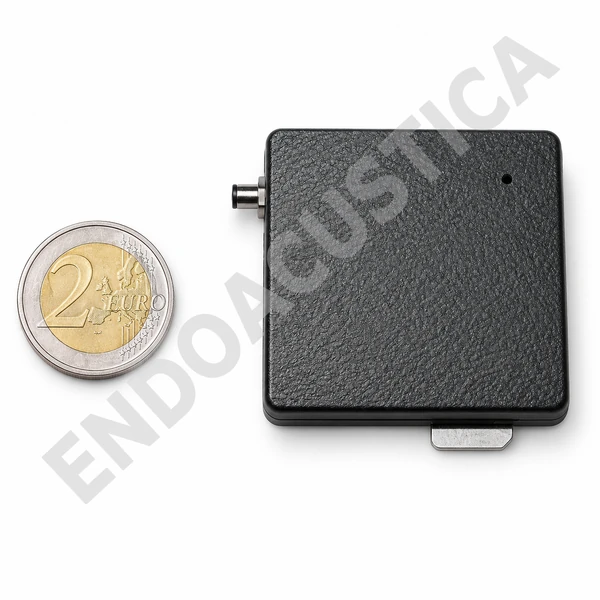
- Adjustable motion sensor and a compact 41 × 46 × 20 mm housing.
€2,300
Buy OnlineProduct code: GPS-CELL
Free consultation, setup guidance and after-sales support.
+39 080 302 6530
Vehicle Data in One Management System
Position, Speed and Altitude
GPS reports include geographic position, speed and altitude. The management software groups incoming data by time so you can review individual vehicle movements.
GPRS and SMS Reporting
The tracker can send data to an IP address over GPRS or deliver ASCII SMS messages to a receiving SIM connected to the management software.
Remote Configuration
SMS commands provide remote setup. Motion-sensor sensitivity can also be adjusted remotely to suit the installation.
Full Description
GPS Reporting and Management Software
GPS-CELL combines a 66-channel GPS receiver with a GSM communications module in a single enclosure. The receiver determines geographic position, speed and altitude, while the cellular connection carries reports to the management system. GPS and GSM antennas are integrated into the unit.
Data can be sent through GPRSPacket-data service carried over a GSM cellular network. Service availability depends on the mobile operator and location. to a configured IP address or through ASCII SMS messages to a receiving SIM linked to the software. A proprietary compressed protocol is used for reporting. The tracker requires a suitable SIM with the necessary data and messaging services.
Your Server, Your Tracking Records
The server runs at the customer’s premises. Tracking reports are delivered to that customer-hosted system rather than an external tracking platform. The direct connection describes the destination of the tracking data; GSM/GPRS transmission still uses the mobile operator’s network.
Review Multiple Vehicles and Their History
The proprietary management software supports multi-vehicle configurations of 5 to 40 units. Reports are collected in a database indexed by time, allowing operators to examine a vehicle’s recorded movements individually rather than work through separate messages.
A web interface makes the management system accessible from a smartphone. This is browser-based access to the software; the source does not specify a separate Android or iOS app.
GPS Acquisition and Position Accuracy
The receiver is rated at −165 dBm tracking sensitivity and −148 dBm acquisition sensitivity. Position accuracy is specified as 10 m 2D RMS, or 5 m with WAAS correctionSatellite-based augmentation data used to improve GPS positioning where the service and receiver conditions support it.. These are receiver specifications, not a guarantee of the accuracy of every reported position.
Approximate acquisition times are 0.1 seconds for reacquisition, 1 second for a hot start, 38 seconds for a warm start and 42 seconds to first fix with a clear sky and stationary tracker. The one-second hot-start figure describes reacquiring a position with retained receiver information; it does not specify one-second reporting intervals.
Compact Hardware and External Power
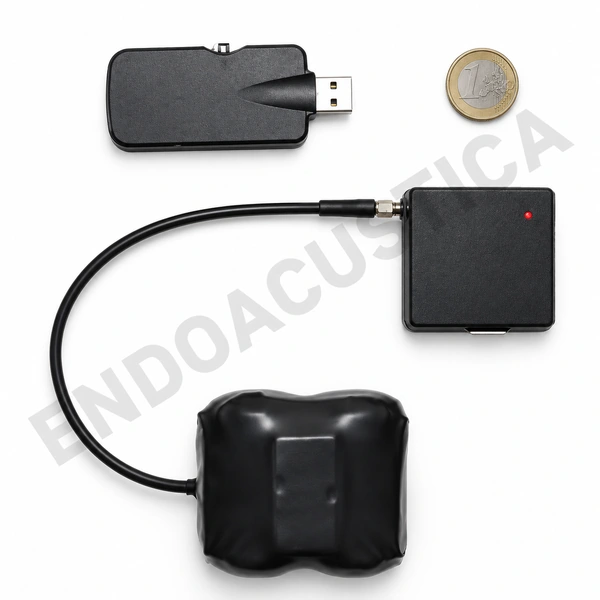
The electronics measure 31 × 31 × 15 mm. The plastic housing measures 41 × 46 × 20 mm, making the unit suitable for installations where space is limited. A neodymium magnet provides attachment to a suitable ferrous metal surface, and the integrated antennas reduce the number of separate components.
Power Options for Different Installations
The magnetic-mount configuration uses a typical 3.6 V DC supply. For an internal vehicle installation, a 7–28 V DC supply can be used with the external voltage converter. Power can come from a compatible battery or power adapter, depending on the configuration.
At 3.6 V, specified current draw is 12 mA while the vehicle is stationary and GSM remains registered, 85 mA during tracking and data transmission, and 2 mA in sleep mode. Battery capacity and the amount of time spent in each operating state determine runtime. External vehicle power and battery operation should therefore be considered separately.
Battery Packs for Extended Assignments
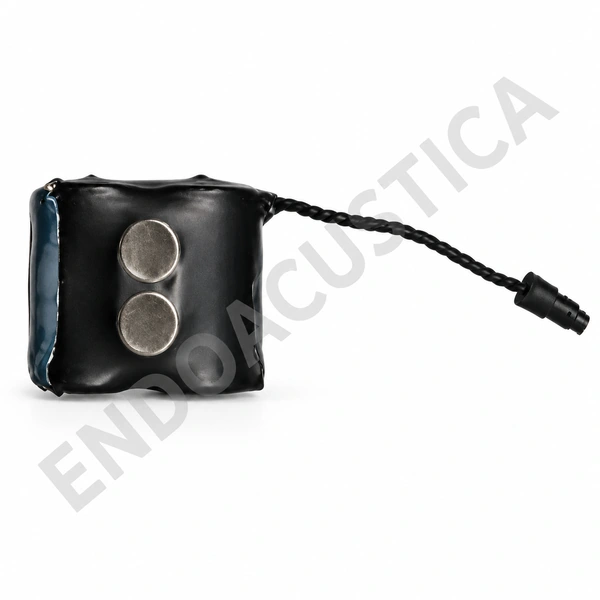
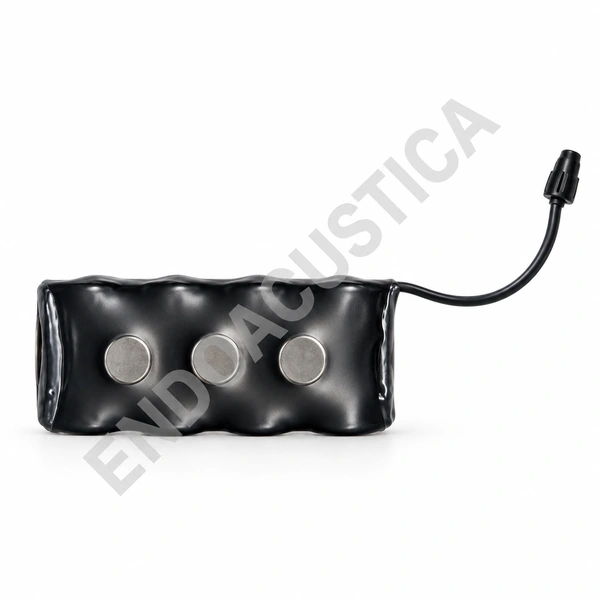
A four-cell SaftSaft is the battery manufacturer. The specified packs contain either two or four cells; battery model and capacity are not specified here. battery pack provides up to 40 days under ideal conditions. The two-cell Saft pack provides up to 20 days under ideal conditions. Actual runtime varies with reporting activity, reception and time spent in each operating state.
Motion Sensing and Remote Setup
The built-in motion sensor has adjustable sensitivity, with settings editable remotely. SMS configuration lets the operator change supported settings without retrieving the unit from the vehicle. Setup should account for the mounting location, expected movement and power arrangement.
Network Requirements
GPS-CELL uses quad-band GSM at 850, 900, 1800 and 1900 MHz, with GPRS data. This model operates on 2G networks. Confirm compatible service with the intended mobile operator before selecting this configuration, especially for use across different countries.
Technical Specifications
| Product code | GPS-CELL |
|---|---|
| GSM bands | 850 / 900 / 1800 / 1900 MHz |
| RF output power | 2 W, Class 4 at 900 MHz; 1 W, Class 1 at 1800 MHz |
| Reporting protocol | Proprietary compressed protocol over GPRS and/or SMS |
| SIM | GSM SIM with data service enabled; sliding SIM holder |
| Data delivery | GPRS to an IP address or ASCII SMS to a receiving SIM linked to the management software |
| Reported data | Location, speed, altitude and system data |
| Management | Customer-hosted server and proprietary software; smartphone web interface |
| Server architecture | Tracking data delivered to the customer’s server without external servers |
| Battery runtime: four-cell Saft pack | Up to 40 days under ideal conditions. Actual runtime varies with use. |
| Battery runtime: two-cell Saft pack | Up to 20 days under ideal conditions. Actual runtime varies with use. |
| Multi-vehicle support | Configurations of 5 to 40 units |
| Remote configuration | SMS commands |
| GPS receiver | 66 channels |
| Tracking sensitivity | −165 dBm |
| Acquisition sensitivity | −148 dBm |
| Position accuracy | 10 m 2D RMS; 5 m 2D RMS with WAAS correction |
| Reacquisition | Approximately 0.1 seconds |
| Hot start | Approximately 1 second |
| Warm start | Approximately 38 seconds |
| Time to first fix | Approximately 42 seconds, clear sky and stationary tracker |
| Supply: magnetic installation | 3.6 V DC typical |
| Supply: internal vehicle installation | 7–28 V DC through an external voltage converter |
| Current: stationary | 12 mA at 3.6 V, vehicle stationary and GSM registered |
| Current: tracking and transmission | 85 mA at 3.6 V |
| Current: sleep | 2 mA at 3.6 V |
| GSM antenna | Integrated dual-band patch antenna; see configuration note below |
| GPS antenna | Integrated high-gain ceramic antenna |
| Motion sensor | Adjustable sensitivity; remotely configurable |
| Electronics dimensions | 31 × 31 × 15 mm (1.22 × 1.22 × 0.59 in) |
| Housing dimensions | 41 × 46 × 20 mm (1.61 × 1.81 × 0.79 in) |
| Housing | Plastic |
| Mounting | Neodymium magnet |
The radio is specified as quad-band, while the integrated GSM antenna is described as dual-band. Confirm the antenna and network configuration for the intended country before ordering.
Applications
Company Vehicle Monitoring
Collect reports from several vehicles in one management system. Time-indexed records make it easier to review individual trips and compare activity across the configured fleet.
Authorized Investigations
The compact housing, magnetic attachment and remote configuration support temporary vehicle assignments. Location history provides a record of received positions for subsequent review.
Dedicated Tracking Workstations
GPRS delivery to an IP address and SMS delivery to a receiving SIM provide options for connecting trackers to the management software. The receiving setup can be planned around the organization’s workflow.
Frequently Asked Questions
Does GPS-CELL send data through an external tracking server?
No. The customer hosts the server at their own premises. Tracking reports are delivered to that system without passing through external tracking servers. Cellular transmission still uses the mobile operator’s network.
Does GPS-CELL use 4G LTE?
No. GPS-CELL uses GSM/GPRS 2G. Compatible 2G service is required from the intended mobile operator.
Does the one-second figure mean a location update every second?
No. Approximately one second is the GPS hot-start acquisition time. A reporting interval is not specified by that figure.
How does the tracker send its data?
It can send reports over GPRS to a configured IP address or as ASCII SMS messages to a receiving SIM connected to the management software.
Can I access the system from a smartphone?
Yes. The management software provides a web interface for smartphone access. A separate mobile app is not specified.
How many vehicles can the software manage?
The source specifies multi-vehicle configurations from 5 to 40 units. Confirm the required capacity when specifying the system.
What determines battery life?
The four-cell Saft pack provides up to 40 days under ideal conditions; the two-cell pack provides up to 20 days. Actual runtime varies with reporting activity, reception and operating state.
Can settings be changed remotely?
Yes. The tracker supports configuration by SMS, including remotely adjustable motion-sensor sensitivity.
System Configuration and Support
Network and SIM
Review the intended country, operator and GSM/GPRS service before selecting the tracker configuration.
Software and Receiving Setup
Discuss the vehicle count, IP-address delivery or receiving-SIM setup, and access through the software’s web interface.
Power and Runtime
Specify the battery or vehicle-power arrangement and expected reporting activity so runtime can be assessed for that configuration.
Related Tracking Devices
 GPS-TRACKER-4G
4G Vehicle GPS Tracker
Vehicle tracking over LTE with an app, SMS controls and a rechargeable battery.
 G-TRACKER
GPS Route Logger
Stores routes for later review rather than transmitting reports to a receiving system.
 GPS-MULTITASK
GPS Tracker with Audio Recording
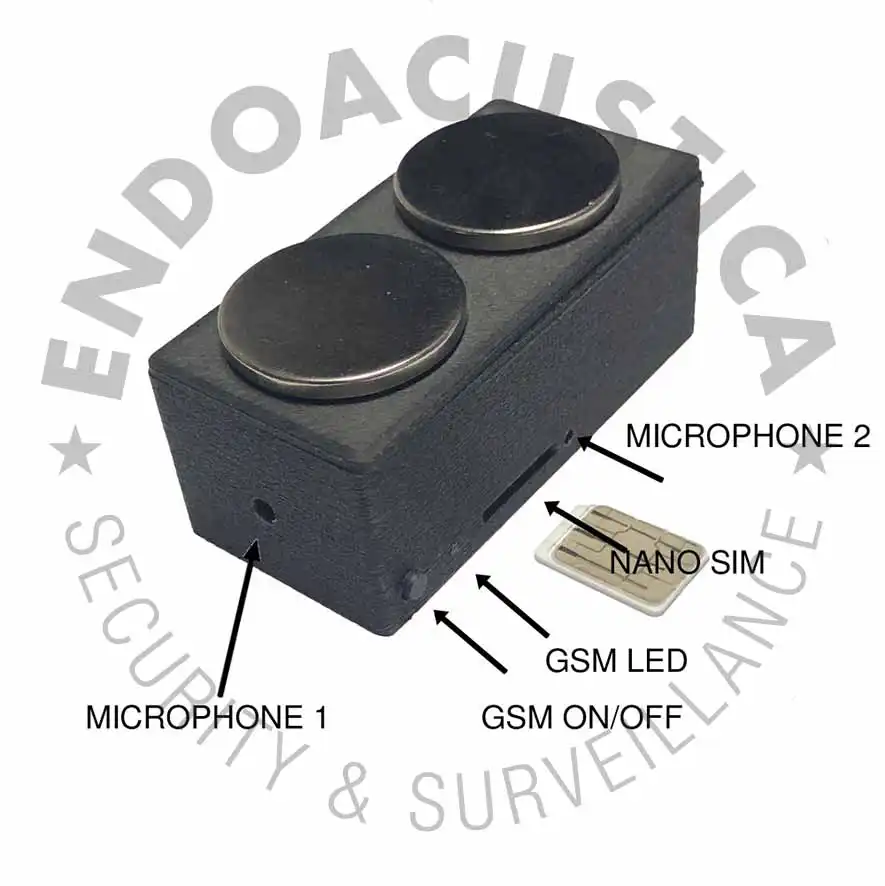
Combines vehicle location, GSM listening and local audio recording.
 ENDO-TRACKER
Bluetooth Tracker Without a SIM
A different approach using nearby iPhones for location reports, managed through an Android or iOS app.
Configure a GPS-CELL System
Request pricing and technical details for your network, vehicle count and power requirements.