Logo endoacustica

Endoacustica offers, Exclusive Customer Service and free Training
  • Products
      • Spy phones
      • Mini voice recorders spy
      • Spy earpiece
      • Spy listening devices
        • Gsm remote listening devices
        • Analog audio transmitter
        • Encrypted audio transmitter
        • Landline bugging devices
      • Analog Digital Transceivers
      • Listen through walls devices
      • Shotgun Microphone
      • Voice Changers
      • Mobile phone interception
      • Spy cameras
      • Hidden spy camera DVR
      • wifi 4G umts IP mini spy cameras
      • Video receiver - transmitter
      • Borescopes - inspection cameras
      • Night vision
      • Surveillance drones
      • GPS tracker - RF tracker
      • Encrypted cell phones
      • Speech protection system
      • RF signal jammer
      • Counter surveillance
      • Parental Control Apps and Devices
      • Remote computer access
      • Anti-theft - Self defense
      • Miscellaneous
  • Solutions
      • Secure Communications
      • Anti-Eavesdropping Systems
      • Emergency Blackout Kit
      • People and Vehicle Tracking
      • Aerial Surveillance
      • Long-Range Surveillance
      • Home Video Surveillance
      • Bug Detection
      • Protection Against Eavesdropping
  • company
  • Services
    • Bug Sweep
    • AI Disclosure Assessment
    • Penetration Test
    • Mobile Data Extraction
  • Contacts
    • Contact Page
    • Quick Contacts
  • Blog
    • Italian
    • English
    • مقالات
☎ +39 080 302 6530
  1. Home
  2. GSM Bugs
  3. GSM Spy Bugs for Remote Listening Devices
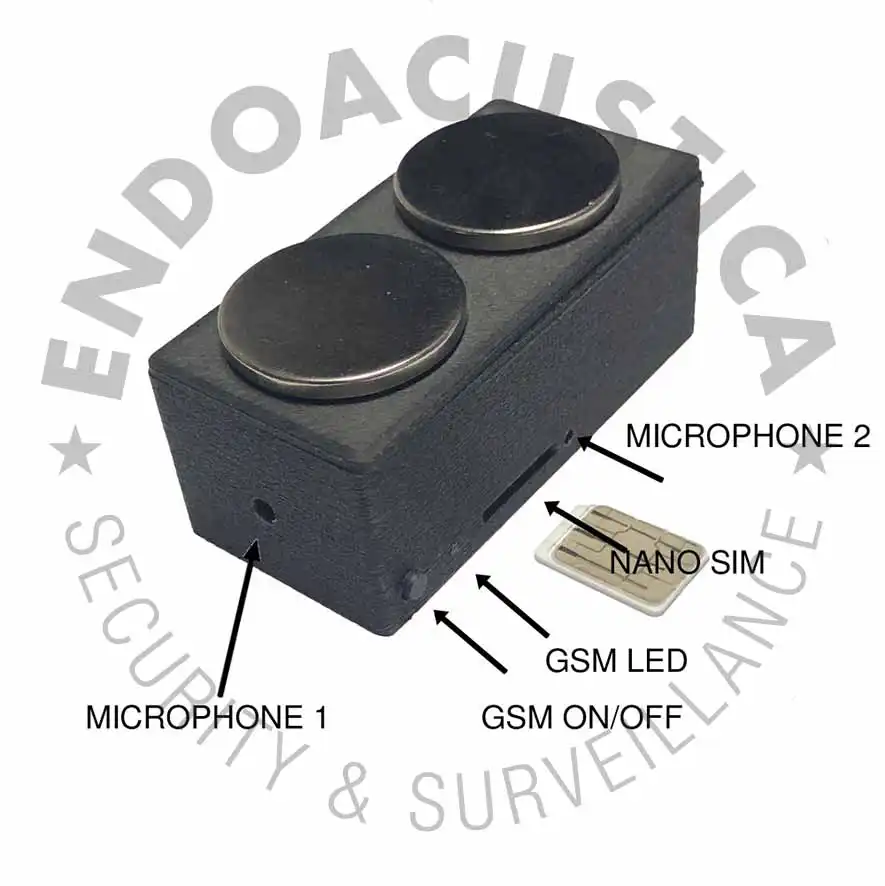
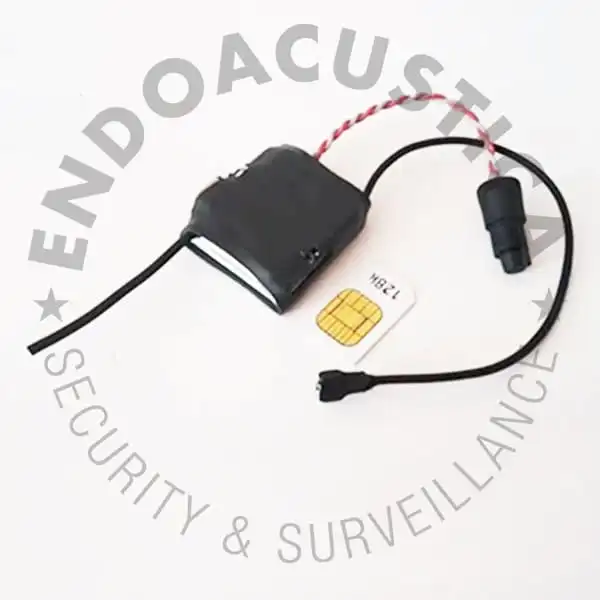
Compact professional GSM listening device Voice-activated GSM bug with GPS GSM listening device for vehicles with GPS and audio recorder Concealed GSM listening device in a power strip
Compact professional GSM listening device

Compact professional GSM listening device Voice-activated GSM bug with GPS GSM listening device for vehicles with GPS and audio recorder Concealed GSM listening device in a power strip

How GSM Bugs Work: Technology, Features and Types

  • How GSM bugs transmit audio over cellular networks
  • Differences between GSM, 4G/LTE and newer cellular technologies
  • Voice activation, motion sensors and remote functions
  • Battery-powered and continuous-power systems
  • Vehicle, indoor and concealed GSM bug configurations
  • Looking for a device? View our professional GSM listening devices

How Does a GSM Bug Work?

A GSM bug is a compact audio surveillance device that uses a cellular network to transmit sound from a microphone to a remote listener. Unlike a traditional radio bug, it does not require the listener to remain within the radio range of a nearby receiver.

Traditional GSM models contain a SIM card and can be accessed by calling the number associated with the device. When the connection is established, the microphone captures sounds in the surrounding environment and the audio is transmitted through the cellular network. The practical operating distance therefore depends primarily on compatible cellular coverage rather than the distance between the device and the listener.

This is one of the main differences between cellular listening devices and conventional analog RF bugs. An RF transmitter communicates directly with a dedicated receiver and consequently operates within a defined radio range.

GSM vs 4G/LTE vs 5G Listening Devices

The terms GSM bug and GSM listening device are often used broadly to describe listening devices that transmit audio over a cellular network. However, not every cellular listening device uses the same mobile technology. Depending on the model, the device may operate on traditional GSM networks or on newer 4G/LTE and 5G networks.

Traditional GSM bugs were designed primarily for 2G cellular networks. Their main advantage is simplicity: a SIM card is installed in the device and the microphone can typically be accessed by calling its telephone number. However, the availability of 2G networks varies considerably from one country and mobile carrier to another as older cellular infrastructure is gradually being replaced.

4G/LTE listening devices use newer cellular infrastructure and are particularly important in countries where older GSM networks have already been reduced or discontinued. Depending on their design, 4G devices may use cellular voice services or data connections to transmit audio and support additional remote functions.

5G listening devices represent the latest generation of cellular-based systems. As with 4G/LTE equipment, actual operation depends on the modem installed in the device, supported frequency bands, SIM card, carrier and network availability. A device described as 5G must therefore be checked for compatibility with the networks available in the country where it will be used.

It is important to distinguish cellular technology from audio quality. Moving from GSM to 4G or 5G does not by itself guarantee better sound. Microphone quality, sensitivity, DSP processing, installation position and background noise remain major factors in determining how clearly audio can be captured.

Which Cellular Technology Should You Choose?

The first consideration should be network compatibility. A listening device must support the cellular technology and frequency bands used by the selected mobile carrier. For international applications, this is especially important because 2G, 4G/LTE and 5G availability and supported bands differ between countries.

For this reason, the newest network technology is not automatically the best choice for every application. The appropriate device is the one that matches the available cellular network, required functions, operating environment and power requirements.

From GSM to 4G/LTE

The term GSM bug is still commonly used for cellular listening devices, although newer systems may operate on 4G/LTE networks. The network technology supported by the device is important because mobile infrastructure and available frequency bands vary by country and carrier.

Before choosing or deploying a cellular listening device, it is therefore necessary to verify the supported network, SIM compatibility and cellular coverage in the area where the system will operate.

Microphones and Audio Quality

Audio quality depends on more than the cellular connection. Microphone sensitivity, placement and audio processing all affect how clearly voices and surrounding sounds can be captured. Professional models may use high-sensitivity microphones and DSP processing to improve intelligibility and reduce the effects of background noise.

These characteristics become particularly important inside vehicles or in larger and noisier environments, where vibration, distance from the sound source and installation position can significantly affect the captured audio.

Types of GSM Bugs

GSM listening devices are available in different configurations depending on how and where they need to operate. Compact models can use an internal rechargeable battery, while systems intended for longer operation can use larger batteries or an external power source.

Other models can be concealed inside everyday objects such as power strips, wall clocks, desk lamps, sensors and other electronic devices. When a suitable power source is already available inside the object, the listening system may be powered continuously instead of relying exclusively on an internal battery.

Voice, Motion and Vibration Activation

Some GSM bugs include VOX voice activation. Instead of remaining continuously active, the system can respond when sound is detected and, depending on the model, initiate a call or another programmed function.

Devices designed for vehicles may also include motion, vibration or inertial sensors. These sensors can detect when a vehicle or object begins to move and trigger specific functions automatically. Remote configuration by SMS is also available on some models.

GSM Bugs for Vehicles

Vehicle installations have different requirements from fixed indoor installations. Battery life, access to the vehicle's power supply, vibration, cellular reception and microphone placement all need to be considered. Some systems combine cellular audio with GPS tracking, audio recording or motion detection.

Learn More or Compare Professional Models

The most suitable technology depends on the cellular networks available in the country of use, required operating time, installation environment, power source and audio requirements.

For specifications and currently available models, see our professional GSM listening devices . Endoacustica Europe supplies these systems for lawful professional applications and provides technical assistance in selecting the appropriate configuration.

Technical Review

This guide has been reviewed by Endoacustica Europe's technical team, which has over 20 years of experience with professional audio surveillance, GSM/4G listening devices and electronic security systems. Technical information is periodically reviewed to reflect changes in cellular networks, device compatibility and surveillance technologies. Last technical review: August 2026.

EndoacusticaEUROPE

Security technologies.
Dedicated consultancy and support.

Let's talk+39 080 3026530
Contact our team

Offices and support

Bari Headquarters

Via Umberto Terracini, 22
70029 Santeramo in Colle
+39 080 3026530

Roma

Via Boezio, 6 · 00193 Roma
+39 06 32803486

Milano

Via Mauro Macchi, 8 · 20124 Milano
+39 02 67739127

Insights

Guides and resources about our products.

Smartphone monitoring
  • Professional spy phones
  • How to track a phone with WhatsApp
  • Spy Phone App
Audio surveillance
  • Covert listening devices overview
  • Audio surveillance equipment guide
  • Analog radio audio bugs
  • Clothing hidden microphones
  • Spy microphones
  • Spy bugs guide
  • Best long-range listening devices
  • Small audio bugs: insights
Counter-surveillance and defense
  • How to choose the best signal jammer
  • Office bug sweep
  • FPV drone tactics
GPS and radio-frequency trackers
  • GPS tracking devices
  • GPS tracker guide
  • GPS tracker guide for cars
  • Where to hide a GPS tracker in a car
  • GPS trackers without monthly fees
  • GPS tracker for motorcycles
  • Wearable GPS trackers for people

Services

  • TSCM bug sweep (TSCM)
  • Penetration test
  • Mobile data extraction
All services

Company

  • About us
  • Contact us
  • Blog & insights
Follow us
  • LinkedIn
  • YouTube
  • Facebook
  • Instagram
  • X
  • Telegram
Message usWhatsAppTelegram

© 2026 Endoacustica Europe s.r.l.VAT No. IT06836020724

  • Privacy & cookie policy
  • Cookie preferences
  • RSS
WhatsApp Telegram

Loading chat…

Read the policy